 BETA
Person
Cao Cao
155 CE–220 CE · Chancellor at the end of the Eastern Han · Cao Cao
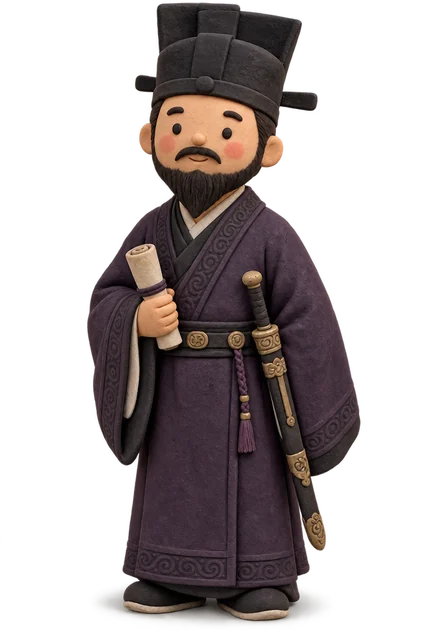
A statesman and poet who made his name by putting down the Yellow Turban Rebellion at the end of Eastern Han and who united the north by beating Yuan Shao at the Battle of Guandu, laying the foundation for the state of Wei that his son Cao Pi founded.
Was Cao Cao a villain or a hero? Cao Cao made his name in the Yellow Turban Rebellion and united the north by beating Yuan Shao at the Battle of Guandu. He also suffered a crisis, losing at Red Cliffs, but he laid the foundation for his son Cao Pi to found Wei. We should judge people not only by their image in the novel but by the records too.
More detail
Two sources checked
A villain or a hero? Cao Cao is still someone about whom people's opinions are split. Cao Cao was born in 155 in Qiao County, in the Pei region. In 184 he made his name by putting down the Yellow Turban Rebellion.
In 196 he welcomed Emperor Xian of Han, who had been wandering, to Xuchang and issued orders in the emperor's name. It is like sending out a class notice in the teacher's name, so his words probably carried weight.
In 200, at the Battle of Guandu, he beat Yuan Shao, who had a much larger force, and took the north. What mattered most in Cao Cao's eyes was the food to feed his soldiers. He settled people and soldiers on abandoned land to farm it, in a system called tuntian, and that is how he got his army's grain. It is a similar idea to growing school lunch ingredients yourselves in a school garden.
But a crisis came in 208. He went south to attack and was beaten at Red Cliffs by the allied forces of Sun Quan and Liu Bei. In 213 he became Duke of Wei and in 216 King of Wei, but he never became emperor, and he died in 220. His son Cao Pi founded the state of Wei.
In the novel Romance of the Three Kingdoms he is drawn as a cunning villain, but historians also rate him as an outstanding statesman and poet. It seems Cao Cao is telling us not to judge a person only by the image in the story, but to look at the records too.
Life timeline
- 196 CEEscorts Emperor Xian to Xuchang
- 200 CEDefeats Yuan Shao at Guandu
- 216 CEBecomes King of Wei
Related events
- 184 CEXu Shao Appraises Cao Cao ('Capable Minister in Peace, Treacherous Hero in Chaos')
- 189 CECao Cao Kills Lü Boshe's Household
- 189 CECao Cao Offers the Seven-Star Sword
- 190 CECoalition Against Dong Zhuo
- 190 CEGuan Yu Slays Hua Xiong Before the Wine Cools
- 191 CEZhang Lu's Five Pecks of Rice Regime in Hanzhong
- 192 CECao Cao Takes Yan Province and the Qingzhou Army
- 193 CECao Cao's Attack on Xuzhou
- 194 CELü Bu's Raid on Yan Province and the Battle of Puyang
- 195 CEEmperor Xian's Eastward Return — from Chang'an to Luoyang
- 196 CECao Cao Begins the Military Farm System
- 196 CECao Cao Takes Emperor Xian to Xu
- 197 CEThe Battle of Wancheng and Dian Wei's Death
- 197 CEYuan Shu Declares Himself Emperor
- 198 CEThe Battle of Xiapi and the End of Lu Bu
- 199 CECao Cao and Liu Bei Warm Wine and Discuss Heroes
- 199 CEZhang Xiu's Second Surrender
- 200 CEThe Battle of Baima and Guan Yu's Feat
- 200 CEDong Cheng's Secret Edict Plot
- 200 CEGuan Yu Leaves Cao Cao and Returns to Liu Bei
- 200 CEBattle of Guandu
- 200 CEGuan Yu's Thousand-Mile Journey and Slaying Generals at Five Passes
- 200 CEThe Raid on Wuchao — Night at Guandu
- 201 CEBattle of Cangting
- 201 CELiu Bei's Stay at Xinye and Xu Shu
- 202 CEYuan Shao's Death and the Split Between Yuan Tan and Yuan Shang
- 204 CEThe Fall of Ye
- 205 CEGao Gan's Rebellion in Bing Province
- 205 CEBattle of Nanpi and the Death of Yuan Tan
- 205 CEZhang Yan of the Black Mountain Bandits Joins Cao Cao
- 207 CEThe Battle of Bailangshan (Campaign Against the Wuhuan)
- 207 CEGongsun Kang Sends the Heads of Yuan Shang and Yuan Xi to Cao Cao
- 208 CEBattle of Changban
- 208 CEThe Death of Hua Tuo
- 208 CEBattle of Red Cliffs
- 208 CEHuang Gai's Bitter Flesh Strategy
- 208 CEZhao Yun and Zhang Fei at Changban
- 208 CEGuan Yu Lets Cao Cao Go at Huarong Road
- 208 CEJiang Gan Steals the Forged Letter (the Meeting of Heroes)
- 208 CEBorrowing 100,000 Arrows with Straw Boats
- 208 CEXu Shu's Mother and the Forged Letter
- 210 CEThe Bronze Sparrow Terrace at Ye and Jian'an Literature
- 211 CECao Cao Cuts Off His Beard and Throws Away His Robe
- 211 CEXu Chu Strips to the Waist and Fights Ma Chao
- 211 CEZhang Song Tries to Present the Map of Western Shu and Recites a Book for Yang Xiu
- 211 CEThe Battle of Tong Pass
- 213 CEThe Battle of Ruxu
- 213 CECao Cao Is Made Duke and King of Wei
- 215 CECao Cao's Attack on Hanzhong and Zhang Lu's Surrender
- 219 CEBattle of Mount Dingjun and the Taking of Hanzhong
- 219 CEGuan Yu's Attack on Fancheng (Flooding the Seven Armies)
- 219 CEChicken Ribs: One Word Costs Yang Xiu His Life
- 219 CEPang De Goes Out Carrying a Coffin to Fight Guan Yu
- 220 CECao Cao's Death and His Wish for a Simple Funeral
- 220 CECao Pi Receives the Throne from Emperor Xian of Han (Founding of Wei)
- 220 CEGuan Yu's Spirit Appears on Mount Yuquan