 BETA
Person
Qin Shi Huang
259 BCE–210 BCE · Emperor of Qin · Qin Dynasty
Birth name: Ying Zheng
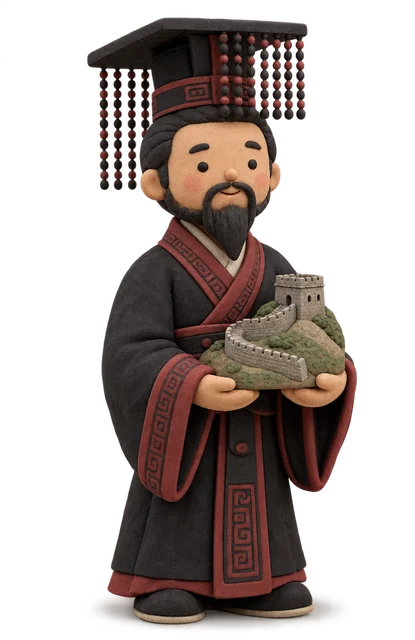
Qin Shi Huang (Ying Zheng) became king of Qin at thirteen in 246 BCE and, by 221 BCE, had destroyed six states to unify China for the first time as its First Emperor. He standardized writing, money, and weights and measures and built roads and the Great Wall, but he burned books and kept calling up the people for endless labor, which brought resentment. After his death in 210 BCE, Qin collapsed within four years.
How did a thirteen-year-old king bring China together for the first time? Qin Shi Huang destroyed six states, made writing, money, and measuring units the same everywhere, built roads, and linked up the Great Wall. But he burned books and made the people suffer so much that they resented him. He died in 210 BCE, and within four years Qin fell too. It shows that even great deeds are hard to keep going once you lose people's hearts.
More detail
Two sources checked
How did a thirteen-year-old boy become the emperor who first brought China together? Qin Shi Huang's name was Ying Zheng. He was born in 259 BCE in Handan, the capital of Zhao. His father, King Zhuangxiang, died early, and in 246 BCE, at thirteen, Zheng became king of Qin.
At first the chancellor Lu Buwei ran the state. It was a bit like a grown-up helping out beside a young class president. But once he was grown, Zheng ruled for himself and used talented men such as Li Si. From 230 to 221 BCE he defeated six states one after another and called himself the "First Emperor" (Shi Huangdi).
But uniting the land was not the end. Every state had its own writing, its own money, and its own way of measuring length and weight. It is like a group chat where everyone speaks a different language and nobody can talk. So he standardized writing, currency, and weights and measures, set up commanderies and counties across the land, and built roads. In the north he joined up the Great Wall, and in the south he expanded his territory.
But this great change came at a price. He burned books, punished scholars, and called up the people for endless work on palaces and tombs, which brought resentment. He even sent officials across the sea to search for a medicine that would keep him from growing old.
He died in 210 BCE while touring the empire, and Qin fell just four years later. Bringing the land together was a great achievement, but his story also shows that it is hard to last once you lose people's hearts. That is why, when you lead a group, you should care about the feelings of the people with you as much as the result.
Life timeline
- 246 BCEBecomes king of Qin
- 221 BCECalls himself emperor
Related events
- 246 BCEQin Shi Huang's Tomb and the Terracotta Army
- 246 BCEThe Zhengguo Canal: A Waterway Built by a Spy
- 230 BCEQin Unifies China
- 221 BCEQin Introduces the Commandery-County System
- 221 BCEStandardizing Writing, Money and Measures
- 219 BCEThe Lingqu Canal: A Canal Joining Two Rivers
- 214 BCEJoining the Great Wall
- 213 BCEBurning of the Books and Burying of the Scholars