 BETA
Person
Winston Churchill
1874–1965 · British prime minister · United Kingdom
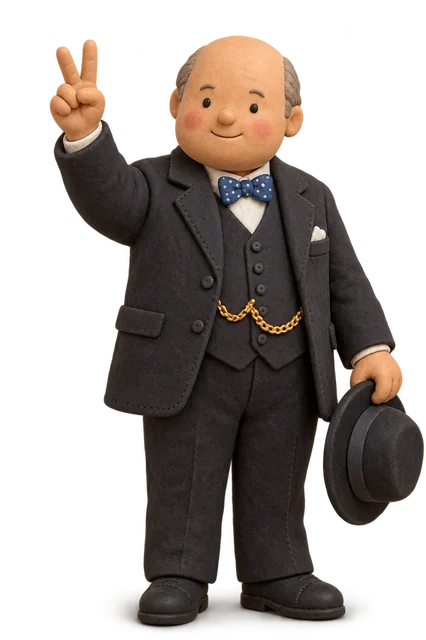
Born into an aristocratic family in 1874, Winston Churchill became prime minister in 1940 and led Britain through the Second World War. His speeches gave the people courage and he took part in the Cairo Declaration, but he is also criticized for opposing independence for the colonies and for his handling of the Bengal famine, so his achievements and faults are both discussed.
Churchill was the prime minister who led Britain in the Second World War. There was a time when his warnings about the danger of Hitler were ignored, but after he became prime minister his powerful speeches gave the people courage, and he took part in the Cairo Declaration, which promised Korea's independence. But he is also criticized for opposing independence for the colonies. His story teaches us how to look at a person's good deeds and mistakes together.
More detail
Two sources checked
Can one person be a hero and be criticized at the same time? Winston Churchill is just the kind of person who raises that question. Born in 1874 at Blenheim Palace as the son of an aristocratic family, he worked as a soldier and war correspondent in India, Sudan and South Africa, and became a member of Parliament in 1900.
But it was not always smooth. In the First World War, as First Lord of the Admiralty, he had to step down after the failed Gallipoli campaign. In the 1930s he warned about the danger of Hitler, but no one paid attention. It was a bit like posting a warning in a group chat and having nobody read it. We cannot know how Churchill felt then, but perhaps it was a lonely time.
Then in May 1940 he became prime minister. He led the people with a speech saying, “I have nothing to offer but blood, toil, tears and sweat.” He joined hands with the United States and the Soviet Union, and at the Cairo Conference in 1943 he took part, with the American and Chinese leaders, in the Cairo Declaration, which promised Korea's independence. From Churchill's seat, winning the war was probably the most urgent thing.
In the election of 1945, the year the war ended, he lost, but he became prime minister again in 1951 and won the Nobel Prize in Literature in 1953. He died in 1965.
He is honored as a war hero, but he is also criticized for opposing independence for the colonies and for his handling of the Bengal famine (1943), among other things. So Churchill teaches us to look at a person's achievements and mistakes together. We, too, need to practice looking at friends and great figures in a balanced way, not seeing only the good or only the bad.
Life timeline
- 1900Became a member of parliament
- 1940Became prime minister
- 1943Took part in the promise of Korean independence at the Cairo Conference
He took part in the Cairo Declaration together with the American and Chinese leaders. - 1951Became prime minister again
- 1953Awarded the Nobel Prize in Literature
Related events
- 1914Britain's Entry into the First World War
- 1938Munich Agreement and Appeasement
- 1939Britain's Entry into the Second World War
- 1940Battle of Britain and the Blitz
- 1940Dunkirk Evacuation
- 1944D-Day Normandy Landings (British Forces)