
Person
Pericles
495 BCE–429 BCE · Statesman of Athens · Athens
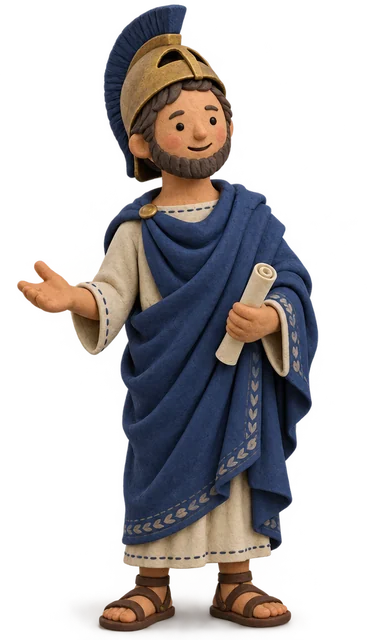
Born in Athens around 495 BCE, Pericles let even poor citizens take part in politics and built the Parthenon, leading Athens to its golden age, but he died in 429 BCE while a plague raged during the Peloponnesian War.
What kind of leader was there when a city shone its brightest? Pericles led Athens's golden age, let even poor citizens take part in politics, and built the Parthenon. But during the war he lost two sons to the plague and died himself. His idea that everyone should be able to have a say in the affairs of the state continues today.
More detail
Two sources checked
What kind of leader was there when a city shone its brightest? The man who led the golden age of Athens was Pericles. He was born around 495 BCE into a noble Athenian family. His mother was a niece of Cleisthenes. He studied with the philosopher Anaxagoras and became known as a calm and reasonable person.
He led Athens from around 461 BCE, and from 443 BCE until his death he was elected general almost every year. In his eyes, it may have been sad to see citizens kept out of politics because they were poor. So he paid jurors a daily wage so that poor citizens could take part in politics too. Today, it would be like opening the way for anyone to come to the class meeting without a burden. He also used money from the Delian League to build the Acropolis buildings, including the Parthenon.
But then crisis struck. In the winter of 431 BCE, when the Peloponnesian War began, he spoke at a funeral for the war dead, calling Athens 'the school of Greece' and speaking of the value of democracy. This speech has come down to us in the book of Thucydides.
The next year a plague spread through Athens. Pericles lost two sons to this plague, and in 429 BCE he died himself. Even the leader who made the city shine could do nothing against war and disease.
His age is still called the 'Age of Pericles.' The idea that everyone should be able to have a say in the affairs of the state lives on in the society we live in today. What outlasted the temples he built may have been that idea.
Life timeline
- 443 BCEBegins to be elected general every year
- 431 BCEFuneral oration for the war dead
Related events
- 462 BCEGolden Age of Athenian Democracy
- 447 BCEBuilding of the Parthenon
- 431 BCEPeloponnesian War
- 430 BCEThe Plague of Athens