 BETA
Person
Mohandas Karamchand Gandhi
1869–1948 · Leader of the Indian independence movement · British India
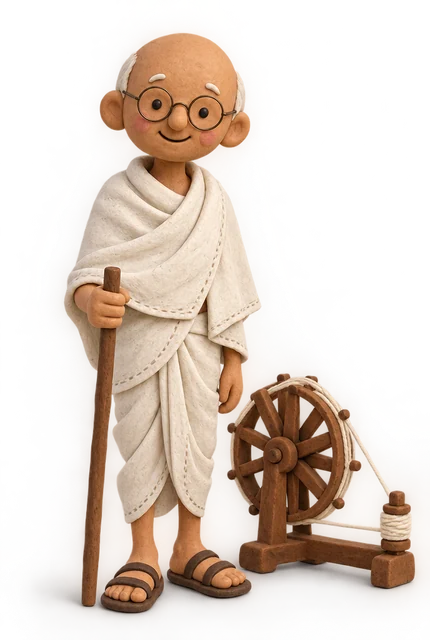
Mohandas Karamchand Gandhi (Mahatma Gandhi) faced discrimination as an Indian in South Africa in 1893 and then practiced nonviolent resistance (satyagraha). He returned to India in 1915 and led the Non-Cooperation Movement, the Salt March, and the Quit India Movement. He was assassinated in Delhi on January 30, 1948, the year after independence.
How did a lawyer thrown off a train come to lead a nation's independence movement? After facing discrimination in South Africa, Gandhi chose the path of resisting without violence, and after returning to India he led movements such as the Salt March. He was assassinated in Delhi in 1948, the year after independence, but the nonviolent resistance he showed is still remembered today.
More detail
Two sources checked
How did a lawyer thrown off a train come to lead a nation's independence movement? Gandhi was born in 1869, and in 1893 he went to South Africa as a lawyer. There he faced discrimination as an Indian: he was thrown out of a first-class train compartment.
For about 20 years after that he practiced satyagraha, nonviolent resistance based on the power of truth, on behalf of Indians in South Africa. It was a way to say "no" to unfair things without violence, instead of fighting back.
When he returned to India in 1915, he led the Non-Cooperation Movement, the Salt March, and the Quit India Movement. On January 30, 1948, the year after independence, he was assassinated in Delhi by a Hindu extremist.
That he chose to stand up proudly without violence, instead of getting angry at discrimination, still strikes a deep chord with us today.
Related events
- 1834Indentured Labor Migration and the Indian Diaspora
- 1930The Salt March (Dandi March) and the Civil Disobedience Movement
- 1932The Poona Pact (Agreement on Representation of the Untouchables)
- 1942The Quit India Movement