 BETA
PersonLegend
Gilgamesh
active 2700–2650 BCE · Legendary king of Uruk · Iraq
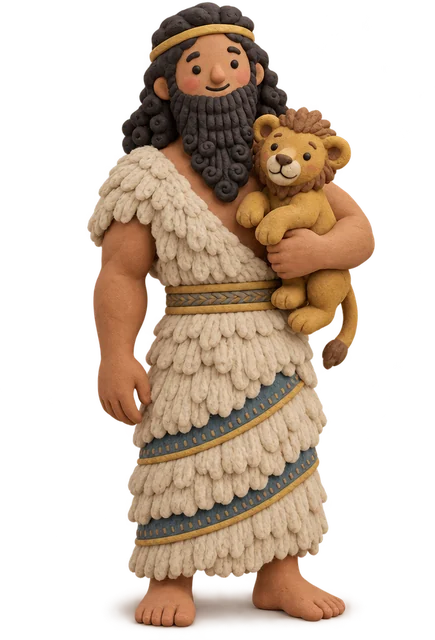
A king said to have ruled Uruk, and the hero of the Epic of Gilgamesh, who was a rough king until the death of his friend Enkidu made him accept that people die. He is thought to have been a real king around 2700 to 2600 BCE, but there are no records from his own time, so he is treated as a figure of tradition.
Why is the story of a king from so long ago still read today? Gilgamesh is said to have ruled Uruk. At first he was a rough king, but after meeting his friend Enkidu and going through his death, he is said to have accepted that people must die someday. He was quite possibly a real king, but with no records from his time he is treated as a figure of tradition, and the sorrow of losing a friend is not strange to us today either.
This comes from a legend. The story has been passed down from long ago, so we cannot know whether it really happened.
More detail
Two sources checked
Why is the story of a king from so long ago still read today? Gilgamesh is said to have been the king who ruled the Sumerian city of Uruk. The Sumerian King List says he ruled for 126 years, and he was remembered as the king who built the great walls of Uruk.
After his death he was honored as a god, like a judge of the underworld, and Sumerian poems singing of his adventures appeared. These poems are said to have come together to make the Akkadian Epic of Gilgamesh.
In the epic, Gilgamesh was at first a rough king who made his people suffer. It may have been like a strong class president who does whatever he likes. Then he meets his friend Enkidu, goes on adventures with him, and changes.
Then, going through his friend's death, Gilgamesh accepts that people must die someday. His story shows how even the strongest king changes his mind when facing something that cannot be avoided.
Scholars think he was probably a real king around 2700 to 2600 BCE, but because there are still no records from his time, he is treated as a figure of tradition. The dates of his life are an estimate based on Enmebaragesi, a king of Kish from the same time, and they differ from scholar to scholar. So the story of Gilgamesh says that being strong does not mean you can have everything. The sorrow of losing a friend is not strange to us today, thousands of years later.