 BETA
PersonLegend
Ame no Hiboko
active 27 BCE · A prince said to have come from Silla · State of Japan
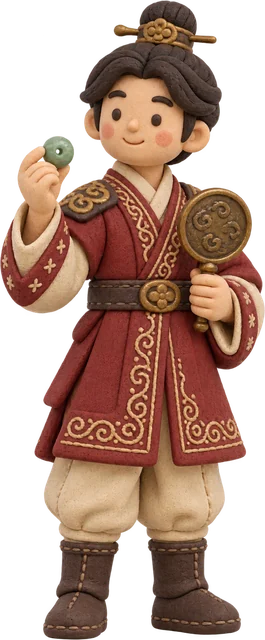
Ame no Hiboko is a legendary figure who appears in the Nihon Shoki as a prince who came from Silla in the 3rd year of Emperor Suinin, and in the Kojiki as one who came in the time of Emperor Ojin. He is said to have brought treasures and settled in Tajima (now northern Hyogo Prefecture), and he was enshrined at Izushi Shrine. His story is read as a tale of early migration between the Korean Peninsula and Japan.
A prince of Silla crossed the sea and lived in Japan? Old books tell a legend that Ame no Hiboko came to Japan with treasures and settled in what is now northern Hyogo Prefecture. His treasures were enshrined at Izushi Shrine, and stories of his descendants are told too. We cannot know if he was a real person, but the tale holds the memory of ancient people who traveled between the Korean Peninsula and Japan.
This comes from a legend. The story has been passed down from long ago, so we cannot know whether it really happened.
More detail
Two sources checked
Have you heard the story of a prince of Silla who crossed the sea to Japan and lived there? The Nihon Shoki and the Kojiki tell of Ame-no-Hiboko (天日槍) in that way. Because this figure is a being in tradition, it cannot be confirmed whether he was a real person.
The Nihon Shoki records that in the third year of Emperor Suinin, in the third month of spring, the Silla prince Ame-no-Hiboko came across with treasures. The Kojiki differs in time, placing it in the reign of Emperor Ojin. The Kojiki has a love story attached: at a water's edge touched by sunlight, a red jewel came into being, and from that jewel a woman was born who became the wife of Ame-no-Hiboko, and when he got angry, she fled to Japan. It is said that her husband chased after her across the sea to Japan, which is how the story begins.
He is said to have passed through various lands from Kyushu by way of the Seto Inland Sea and settled at Izushi in Tajima, where he married the daughter of a local person. The treasures he brought are said to have been eight in all, such as jewels, a sword, a spear, and a mirror. In today's terms, he is like a person who brought only his most precious things when he moved house (this is an analogy). These treasures are said to have been enshrined at the Izushi shrine. The Harima Fudoki also contains a story of his quarrel with a local god over land.
His line of descendants is said to lead to Tajimamori and Empress Jingu. Ame-no-Hiboko in the story is sometimes interpreted as holding a memory of people from the Korean peninsula who crossed to the Japanese archipelago with ironware and technology and settled. However, theories differ on what actually happened.
Even today he is enshrined at the Izushi Shrine in Hyogo Prefecture. The fact that people of two lands on either side of the sea are linked by a single story quietly tells us that Korea and Japan are close neighbors.
Life timeline
- 27 BCECame from Silla in the third year of Emperor Suinin (tradition)
This is the Nihon Shoki's record. The Kojiki places it in the reign of Emperor Ojin.