 BETA
Person
Ariwara no Narihira
825 CE–880 CE · Waka poet, one of the Six Poetry Immortals · Japan (Ritsuryō State)
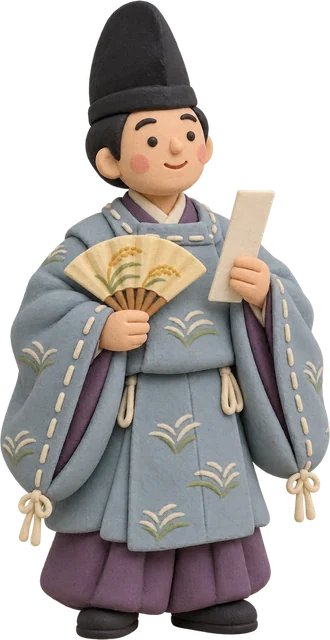
Ariwara no Narihira was born into the imperial family but was given a family name and became a subject. He left passionate love poems and is thought to be the hero of the Tales of Ise, which made him a byword for a handsome man. He was an early Heian poet.
Who was the handsome poet of a thousand years ago? Ariwara no Narihira was born into the imperial family, became a subject, and made his name with poems of love and parting. He is known as the hero of the Tales of Ise, a collection of stories about him, which many people still read. Writing that sings honestly from the heart is loved even as time passes.
More detail
Under review
Who is the person still called the very image of a handsome man after a thousand years? Ariwara no Narihira was born in 825 as the fifth son of Prince Abo, a son of Emperor Heizei. In 826, at his father's request, the brothers received the surname Ariwara and went from being imperial princes to being subjects.
Becoming a subject means weaker political backing. In an age when the Fujiwara family was steadily gaining strength, it was not easy for a young man of imperial descent to get ahead. In 841, at seventeen, he became Ukone no Shokan (a junior officer of the Right Palace Guards), and later he became Konoe Chujo (Middle Captain of the Guards), so he was also called Zaigo Chujo.
He became famous for poems that poured out his feelings without being bound by form. Many of his poems were about love and parting, and he became one of the Rokkasen (Six Poetic Immortals) and the Sanjurokkasen (Thirty-Six Poetic Immortals), and his poems appear in several collections, including the Kokin Wakashu. Stories of love affairs attached to individual poems spread, and these together are said to have become the Ise Monogatari (Tales of Ise).
It is not certain whether the hero of this book really is Narihira. But people have long read it that way, and the image of a young nobleman who loved romance and wandering followed him. He died in 880, at about fifty-five.
In modern terms, it is like the classmate who wrote the most sensitive compositions at school being remembered for a long time. His poems are still read today, a thousand years later, in textbooks and in karuta card games.
Life timeline
- 825 CEBorn as the fifth son of Prince Abo
- 826 CEReceives the surname Ariwara and becomes a subject
- 841 CEBecomes Ukone no Shokan
- 880 CEDies
- 905 CEThe Kokin Wakashu is compiled and includes his poems (time of compilation)