 BETA
Person
Damjing
579 CE–631 CE · Goguryeo monk and painter · Goguryeo
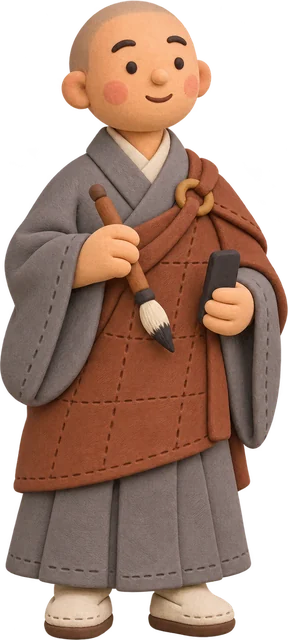
A Goguryeo monk said to have been sent to Japan by King Yeongyang in 610. He is said to have passed on the use of colors and the making of paper, ink and millstones, and to have painted the murals of the Golden Hall of Horyu-ji. The murals burned in 1949, and Japanese scholars do not accept the theory that they were his work.
Was it really Damjing who painted the Horyu-ji murals? They say Damjing crossed from Goguryeo to Japan in 610 and taught how to make colors, ink, paper and millstones. The story that he painted the murals has been handed down, but the murals burned in 1949, and Japanese scholars think the paintings were not his. Even when we separate legend from fact, the culture the two countries shared is precious to us today.
More detail
Two sources checked
Was it really Damjing who painted the Horyu-ji murals? Damjing was a Goguryeo monk, and he is said to have been born in 579 and to have died in 631. The Nihon Shoki records that in March 610 King Yeongyang sent Damjing and Beopjeong to Japan.
According to the records, Damjing knew the Five Classics and could make colors, paper and ink, and millstones like a water mill. However, it does not say he was the first to bring paper-making technology, and some parts may have been added in later times. The Shotoku Taishi Denryaku says Prince Shotoku called the two monks to the Ikaruga Palace.
Here the story spread greatly. It is the tradition that Damjing painted the Sabujeongto-do (the Pure Lands of the Four Buddhas) in the Kondo of Horyu-ji. Korean school curricula too have taught that it is handed down that Damjing painted it. But this mural was burned in a fire during repairs in January 1949, and only some copies remain. Japanese scholars see the mural as a work of the Hakuho period in the late 7th century, since it mixes Western Regions and Tang styles and shows the hands of several people, and they do not say it is Damjing's painting.
From his point of view, the work he took on in a faraway land may not have been painting but teaching. It can be seen that he crossed as a monk and scholar, passed on new skills and learning, and that traces of this seeped into Japanese culture.
Damjing may be remembered more accurately as a person who shared skills and learning than as a painter of murals. While separating legend from fact, it is precious that we remember today the warmth of the culture exchanged between the two countries.
Life timeline
- 579 CEBorn
A birth-and-death notation from a Korean encyclopedia. - 610 CESent to Japan by King Yeongyang
The Nihon Shoki says he crossed together with Beopjeong. - 610 CESaid to have passed on how to make colors, paper, ink and millstones
Some of this may be a later explanation. - 631 CEDied
A notation from a Korean encyclopedia. - 1949The Kondo murals of Horyu-ji were lost in a fire
It happened during repairs.