 BETA
Person
Empress Komyo
701 CE–760 CE · Empress who led welfare work and Buddhism · Japan (Ritsuryō State)
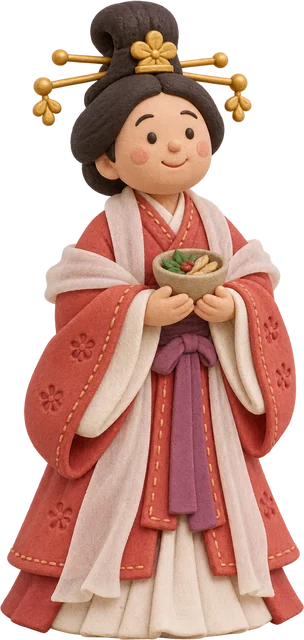
Empress Komyo was a daughter of Fujiwara no Fuhito. She was the first woman who was not of imperial blood, but a subject's daughter, to become empress. She founded facilities to care for the sick and the poor, and also helped build the provincial temples and the Great Buddha of Todai-ji.
There was an empress in the Nara period who cared for sick people? Empress Komyo was the first subject's daughter to become empress, and she set up facilities to treat the ill. She also helped Emperor Shomu make the Great Buddha and set up provincial temples. After her husband died, she gave his treasured belongings to Todai-ji, which began the treasures of today's Shosoin.
More detail
Two sources checked
Can a subject's daughter become an empress? Born in 701 as a daughter of Fujiwara no Fuhito, Anshukubai became at sixteen a consort of Crown Prince Obito. When the crown prince became Emperor Shomu, she bore at his side a daughter, Princess Abe, later Empress Koken.
In 727 her son, Prince Motoi, was born, but he died young the following year. In the same year Prince Asaka was born to another consort, and the Fujiwara family felt a sense of crisis. In 729 Prince Nagaya, who had opposed them, fell, and Komyoshi became the first empress who was not of imperial blood.
After becoming empress, she is said to have founded the Seyakuin, which treated the sick, and the Hidenin, which cared for the poor and ill. A deep believer in Buddhism, she had a five-story pagoda and the western golden hall built at Kofuku-ji, and had sutras copied to pray for the repose of her parents. It is also said that her urging lay behind Emperor Shomu declaring his intention to build the provincial temples (kokubun-ji) and to make the giant Rushana (Vairocana) Buddha.
In 749, when the Emperor handed over the throne, she became empress dowager, set up the Shibi Chudai and placed her nephew Fujiwara no Nakamaro in charge. In effect she wielded real power on behalf of her daughter, Empress Koken. When the retired Emperor Shomu died in 756, she dedicated the things he had treasured to Todai-ji. This was the beginning of the Shosoin treasures.
When Empress Komyo died in 760, the Nakamaro regime also began to decline. Thanks to this woman, who combined politics, welfare, and faith, the Buddhist culture of the Nara period survives to this day.
Life timeline
- 716 CEBecomes a consort of Crown Prince Obito
- 729 CEBecomes empress, the first subject's daughter to do so
- 741 CEOrder to build provincial temples (said to have been urged by the empress)
- 749 CEBecomes empress dowager and sets up the Shibi Chudai
- 756 CEDedicates retired Emperor Shomu's belongings to Todai-ji (the start of the Shosoin)
- 760 CEDies