 BETA
Person
Enomoto Takeaki
1836–1908 · Shogunate Naval Officer, Diplomat, and Statesman · Empire of Japan
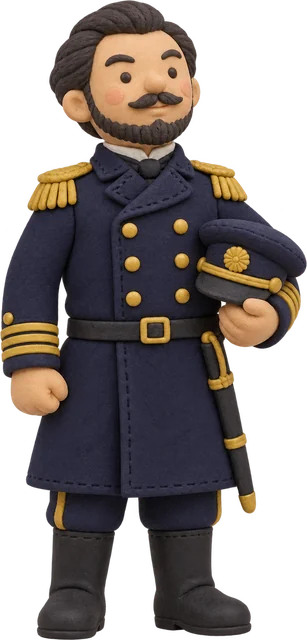
Enomoto Takeaki, born in Edo, studied naval skills in the Netherlands and led the shogunate fleet against the new government at Hakodate in 1868-69 before surrendering. After his release, he signed the Treaty of Saint Petersburg with Russia in 1875, exchanging Sakhalin and the Kuril Islands.
What happened to the general who guarded the losing side's warships to the very end? Enomoto Takeaki fought the new government at Hakodate and surrendered, but he was released and became a diplomat and a minister. He signed the treaty that exchanged Sakhalin and the Kuril Islands. That treaty also changed the homeland of the Ainu people.
More detail
Two sources checked
What happened next to a commander who guarded the warships of the losing side to the end? Enomoto Takeaki was born in 1836 in Edo, the son of a low-ranking shogunate samurai. In 1856 he learned Western navigation at the Nagasaki Naval Training School, and from 1862 he studied in the Netherlands, learning shipbuilding and law.
In 1867 he returned to Japan aboard the warship Kaiyo Maru, built in the Netherlands, and the next year became vice commander of the shogunate navy. When Edo Castle fell, he refused the new government's demand to hand over the warships, led the shogunate fleet north, set up the 'Republic of Ezo' at Goryokaku in Hakodate, and was elected its president. This resistance, which lasted from late 1868 to May 1869, ended in defeat by the new government's forces.
Enomoto, who surrendered, was imprisoned, but Kuroda Kiyotaka of the new government, who valued his talent, campaigned to save him and he was released. Afterward he took part in the development of Hokkaido, and in 1874 became minister to Russia and the next year concluded a treaty exchanging Sakhalin and the Chishima (Kuril) Islands. Under this treaty Japan gave Sakhalin to Russia and gained all of the Chishima Islands. For the Ainu people, it was politics deciding the place where they lived.
Afterward he held posts one after another: Navy Minister, minister to the Qing, Minister of Communications, Foreign Minister, Minister of Agriculture and Commerce, and Education Minister. He died in 1908 at the age of seventy-three.
We should remember together that even the defeated have a next chapter, and that behind the drawing of national borders there are people who had to move from their homes.
Life timeline
- 1856Enters the Nagasaki Naval Training School
- 1862Studies in the Netherlands
- 1868Leads the shogunate fleet north
- 1869Surrenders at Goryokaku
- 1874Minister to Russia
- 1875Concludes the Sakhalin-Chishima exchange treaty
- 1908Dies
Related events
- 1868Boshin War
- 1869Founding of the Hokkaido Development Commission
- 1875The Treaty of Saint Petersburg (Sakhalin-Kuril Exchange Treaty)