 BETA
Person
Hamaguchi Osachi
1870–1931 · Party Politician and 27th Prime Minister · Empire of Japan
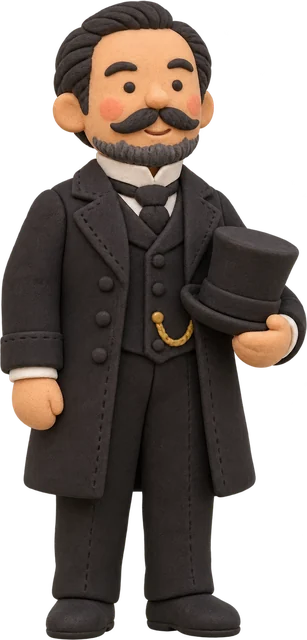
A former Finance Ministry official who became prime minister in 1929, he tried to set the country right through austerity, a return to the gold standard, and arms reduction. He was shot at Tokyo Station in 1930 and died the next year.
Why was Hamaguchi Osachi shot while he was prime minister? He said he would set the country's finances right, so he cut spending and lifted the ban on gold exports, but the Great Depression hit the world at that very time and brought a deep slump. He also signed a naval arms reduction treaty, which made soldiers hate him, and he was shot at Tokyo Station in 1930. His story shows that when violence shakes politics, peace and democracy grow weak.
More detail
Two sources checked
A prime minister so stubborn that people nicknamed him "the Lion" — did that stubbornness save the country, or push it into crisis? Hamaguchi Osachi, from Kochi Prefecture, rose through the Finance Ministry bureaucracy to become a party politician. In 1929 he became prime minister of the Minseito cabinet and set out to "put the nation's finances in order first."
He cut government spending and, in January 1930, lifted the ban on gold exports, trying to bring the yen in line with the international standard. The problem was the timing. The Great Depression that began in the United States was spreading around the world, and the Japanese economy fell into a deep slump as prices and exports collapsed.
In April of the same year he signed the London Naval Treaty. The Navy General Staff and the opposition attacked him fiercely, charging that he had violated the military's right of supreme command. On November 14 he was shot by a right-wing young man on a platform at Tokyo Station and badly wounded.
When the opposition pressed him to appear in the Diet, he forced himself to attend before he had recovered, his condition worsened, and he resigned as prime minister in April 1931. He died on August 26. A few months later the Manchurian Incident broke out, and party politics quickly lost its strength.
Hamaguchi's story is that of a politician who took the hard road of peace and austerity and was brought down by violence. It reminds us even today how fragile democracy becomes when violence gains power in place of words.
Life timeline
- 1870Born in Kochi Prefecture
- 1929Became prime minister
- 1930Lifted the gold export ban
- 1930Signed the London Naval Treaty
- 1930Shot at Tokyo Station
The incident took place on November 14. - 1931Resigned as prime minister
- 1931Died
He died on August 26.