 BETA
Person
Hayashi Fumiko
1903–1951 · Novelist · Empire of Japan
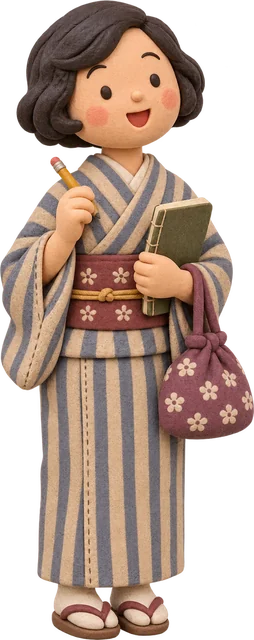
A novelist loved for Horoki (Diary of a Vagabond), which told of a poor, wandering life. During the war she traveled to the front as a war correspondent, and after the war she left works such as Ukigumo (Floating Clouds) and died in 1951 at the age of forty-seven.
How did a poor girl's writing become a bestseller? Hayashi Fumiko became a popular writer with Horoki (Diary of a Vagabond), about the life she lived growing up on the move. During the war she traveled to the front as a war writer, and she died in 1951 at the age of forty-seven. Her story shows that honest writing wins people's hearts, and that a writer's cooperation with the war leaves hard questions.
More detail
Two sources checked
How did writing that a poor girl kept like a diary become a bestseller? Hayashi Fumiko was from Yamaguchi Prefecture and grew up wandering from place to place with her parents from childhood. Moving from job to job, she wrote diaries and poems, and based on them she began running her autobiographical novel Horoki (Diary of a Vagabond) in a magazine in 1928.
Published as a book in 1930, Horoki won readers' sympathy with its heroine who lives cheerfully even in poverty and became a great hit, and Hayashi established herself as a writer. Afterward, in works such as Seihin no Sho (The Book of Honest Poverty), she portrayed the lives of ordinary people warmly and frankly.
When the war with China began, she traveled the front as a war correspondent writing, and wrote Sensen (The Front Line, 1938) and Hokugan Butai (The North Bank Unit, 1939). In 1942 she became a member of the press corps and went to southern regions such as French Indochina. These writings are also criticized as cooperation with the propaganda of the time. After the war she wrote many works with a lonely mood, and she is said to have portrayed the wounds the war left.
She died on June 28, 1951, at age forty-seven. It is said that Meshi (Meal), which she was serializing until the end, was left unfinished.
Hayashi Fumiko's story is that of a woman who kept her own voice amid poverty and wandering, and it also raises the difficult question of writers' cooperation during the war.
Life timeline
- 1903Born, said to be in Yamaguchi Prefecture
The exact birthplace differs from source to source. - 1930Published Horoki as a book
- 1938Went to the China front as a war correspondent
She published Sensen (The Front Line). - 1942Went to southern regions as a press corps member
- 1948Published the postwar work Bangiku (Late Chrysanthemums)
Bangiku is one example. - 1951Died
It was June 28.