 BETA
Person
Hayashi Razan
1583–1657 · Confucian scholar in charge of the shogunate's learning · Edo Shogunate
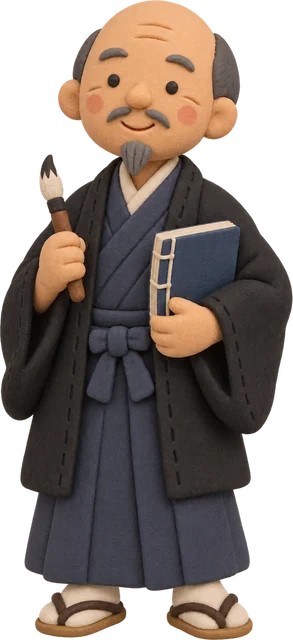
A student of Fujiwara Seika who served four shoguns, from Ieyasu to Ietsuna, took part in drafting the Buke Shohatto (laws for warrior houses) in 1635, and later laid the base of the Shoheizaka Gakumonjo school.
What kind of scholar did the boy called "Bag Ears" become? Razan served four shoguns and organized the shogunate's learning and laws, and his school led on to the Shoheizaka Gakumonjo. His life makes us think about the bright and dark sides of learning that stays close to power.
More detail
Two sources checked
What kind of scholar did the boy called "Sack Ears" become? Hayashi Razan was born in Kyoto in 1583. Around the age of eight he recited word for word a story from the Taiheiki that he had heard only once, and is said to have been nicknamed "Sack Ears" (Fukuro-mimi).
At thirteen he entered Kennin-ji but soon returned and studied Confucian books by himself. In 1605, introduced by his teacher Fujiwara Seika, he met Ieyasu and began working for the shogunate. After that he served four shoguns: Ieyasu, Hidetada, Iemitsu, and Ietsuna.
Razan helped draft the shogunate's diplomatic documents and laws and organized books. In 1635 he took part in the revision of the Buke Shohatto and wrote out the rules of life for samurai. It was a role like a clerk who polishes the sentences when school rules are made.
In 1630 Iemitsu gave him land at Shinobugaoka in Ueno, where he opened a private school, and this school later led to the Shoheizaka Gakumonjo. But in 1657 the Great Fire of Meireki burned his study and books in Kanda; he managed to save only one book and died four days later after falling ill. Working at the shogun's side on diplomatic documents and the organizing of history books, he opened the way for the shogunate to use learning in politics.
The framework of learning he built later became the official learning of the Edo shogunate, but there is also criticism that it was used to justify the class order. It makes us think about what happens when learning is close to power.
Life timeline
- 1583Born in Kyoto
- 1605Met Ieyasu and began working for the shogunate
- 1630Received land in Ueno and opened a school
Some sources give 1632. - 1635Took part in revising the Buke Shohatto
- 1657Lost his study in the Great Fire of Meireki and died