 BETA
Person
Higuchi Ichiyo
1872–1896 · Novelist and waka poet · Empire of Japan
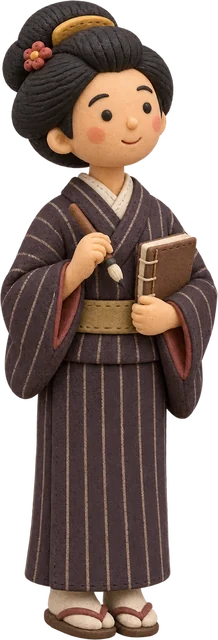
Born into a poor family in Tokyo, Higuchi Ichiyo took on the family's livelihood after her father died. She made her name by writing Omisoka (New Year's Eve), Takekurabe (Growing Up) and Nigorie (Muddy Water) in 1894-96, and died of tuberculosis in 1896 at the age of 24.
How are the writings of a young woman who ran a shop and wrote novels still read today? Higuchi Ichiyo fed her family in poverty, left works such as Takekurabe (Growing Up), and died at 24. Her writing, full of the hearts of people pushed aside, is still read today. Her face is now on Japan's 5,000-yen bill.
More detail
Two sources checked
How did the writing of a twenty-year-old woman, who ran a shop while writing fiction, come to be the face on today's banknote? Higuchi Ichiyo was born in 1872 in Tokyo. As a child she loved books, but because of her family's circumstances she could not stay in school long, and in 1886 she entered Haginoya, a school for waka poetry, to study writing.
When her father died in 1889, she, at seventeen, had to support her mother and younger sister. Her older brothers had also died young. In 1891 she began studying with the novelist Nakarai Tosui, and in 1893 she opened a shop selling stationery and sweets in Ryusenji, a poor neighborhood of Tokyo. The shop did not last long, but the people she met there later became material for her fiction.
Starting with Omisoka (New Year's Eve) in the winter of 1894, she published Takekurabe (Growing Up) and Nigorie (Troubled Waters) and other works one after another the next year, and from late 1894 to early 1896, a period called the 'miraculous fourteen months,' she poured out masterpieces. Takekurabe is a fresh story of girls and boys in a district next to a licensed quarter, and it is said that even Mori Ogai gave it great praise.
But her health failed from tuberculosis, and she died in November 1896 at the age of twenty-four. The diaries she left also became a precious record.
The short story of one poor and sick young woman is still read today because it captured the hearts of overlooked people just as they were. Her face is also on Japan's 5,000-yen note today.
Life timeline
- 1886Enters Haginoya
- 1889Her father dies
She took on supporting the family. - 1891Begins studying fiction
- 1893Opens a shop in Ryusenji
- 1894Publishes Omisoka (New Year's Eve)
- 1895Publishes Takekurabe (Growing Up) and Nigorie (Troubled Waters)
- 1896Dies of tuberculosis