 BETA
Person
Hiratsuka Raicho
1886–1971 · Women's liberation activist and founder of Seito · Empire of Japan
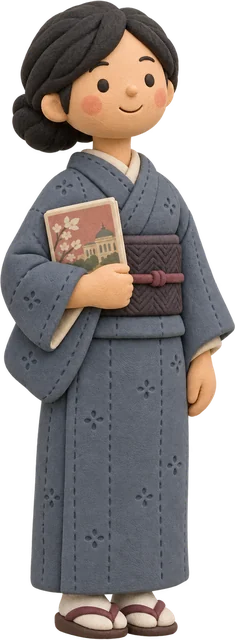
Born into a family of government officials in Tokyo, Hiratsuka Raicho founded the women's magazine Seito (Bluestocking) in 1911 and declared, "In the beginning, woman was the sun." In 1920, with the New Women's Association, she led the effort to change the clause that kept women out of political activity.
Who cried out that "woman was the sun"? In 1911 Hiratsuka Raicho created Seito (Bluestocking), a magazine written by women themselves, and in 1920 she opened the way for women to take part in political meetings through the New Women's Association. After the war she worked for peace. Even the equality we take for granted today began with someone's cry.
More detail
Two sources checked
Who was the person who cried out "Woman was the sun" in an age that said "women must stay quiet"? Hiratsuka Raicho was born in 1886 in Tokyo and graduated from Japan Women's University. She was a young woman who practiced Zen and long pondered "who am I?"
In 1908 an uproar in which she disappeared into snowy mountains with a writer who was a student of her literature teacher was widely reported in the newspapers and brought great condemnation. Even after that, in 1911 she founded Seito (Bluestocking), a literary magazine written and edited by women themselves. The essay "In the Beginning, Woman Was the Sun" in the first issue read like a declaration of women's liberation in Japan. People called these women the "New Women," and were amazed at them, and also spoke ill of them.
She lived in a common-law partnership instead of marriage and raised children, and she also took part in a debate with other women thinkers (the Maternal Protection Debate) over balancing child-rearing and work. In 1920 she formed the New Women's Association with Ichikawa Fusae and others and campaigned to amend Article 5 of the Public Order and Police Law, which said "women cannot take part in political meetings," and in 1922 participation in political meetings was allowed.
After the war ended she devoted herself to the peace movement. She served as president of the Federation of Japanese Women's Organizations and vice president of the Women's International Democratic Federation, and died in 1971 at the age of eighty-five.
It took a long time for one person's courageous writing to shake people's thinking and even change the law. The "equality" that we speak of as a matter of course today also began with someone's cry.
Life timeline
- 1906Graduated from Japan Women's University
- 1908Condemned over the incident of disappearing into the mountains
- 1911Founded Seito
She wrote "In the Beginning, Woman Was the Sun." - 1920Formed the New Women's Association
A campaign to amend the Public Order and Police Law. - 1922Women allowed to take part in political meetings
- 1945Devoted herself to the peace movement after the war
- 1971Died
Related events
- 1900Public Order and Police Law
- 1900The Public Peace Police Law: A Law That Blocked Women from Political Life
- 1911Seitōsha and the Magazine Seitō: A Literary Magazine Made by Women
- 1912Taisho Democracy: The Universal Suffrage Law and the Peace Preservation Law
- 1920The New Woman Association: Women’s Petition That Changed Article 5 of the Public Security Police Law
- 1924The League for the Realization of Women’s Suffrage: Women’s Long March to Vote