 BETA
Person
Hojo Soun
1432–1519 · Forerunner of the Sengoku daimyo · Muromachi Shogunate
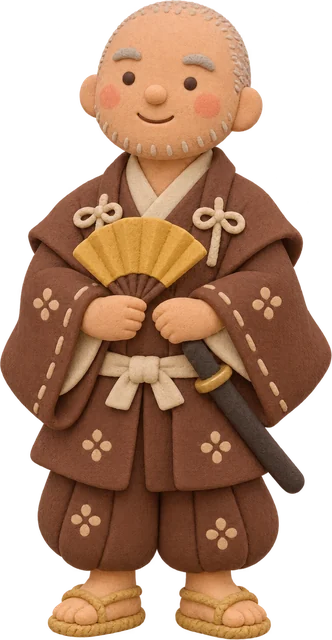
Born Ise Shinkuro, he went down from Kyoto to Suruga, took Izu and Sagami, and founded the Later Hojo family with Odawara as his base. He was a forerunner of the Sengoku daimyo.
Can a person with no land become the master of a whole region? Soun took Izu and Sagami and founded the Later Hojo family with Odawara as his base. He was a forerunner of the Sengoku daimyo, who rose by ability rather than by rank.
More detail
Two sources checked
Can a man with no land become master of a whole region? Hojo Soun in fact never used the family name Hojo; his real name was Ise Shinkuro, and Soun was his Buddhist name. The theory that he came from the Ise family of Kyoto is the most likely. Later generations called him Hojo to distinguish him from the earlier Hojo family (the Kamakura-period regents).
Around 1469 he went down to Suruga and relied on the Imagawa family, into which his sister had married. In 1476, in the succession dispute of the Imagawa family, he sided with the young Ujichika and mediated at court, and for that service he received land and took Ishiwaki Castle.
In the 1490s Soun took Izu. Because some scholars connect this period with the Meio Coup, Soun's conquest of Izu is sometimes counted as the start of the Sengoku period. Next, in 1495 he took Odawara Castle and gradually widened his hold on Sagami.
Soun is said to have lightened taxes on the people and cared for the sick. He is also said to have left a set of 21 articles of teaching that stressed a simple life. He died in 1519 at Nirayama Castle in Izu.
After he settled in Odawara, he is said to have followed policies that won the trust of local lords and farmers. This experience later led to the stable rule of the Later Hojo family.
The family Soun founded ruled the Kanto region for five generations, about 100 years. He is a figure who represents the age of gekokujo (the low overthrowing the high), when a person earned a position by ability and not by rank.
Life timeline
- 1469Relied on the Imagawa family of Suruga (estimated)
- 1476Mediated the succession dispute of the Imagawa family
- 1491Advanced into Izu (the year is disputed)
- 1495Took Odawara Castle
- 1516Brought all of Sagami under control
- 1519Died at Nirayama Castle