 BETA
Person
Hojo Yasutoki
1183–1242 · Third shikken (regent) of the Kamakura Shogunate · Kamakura Shogunate
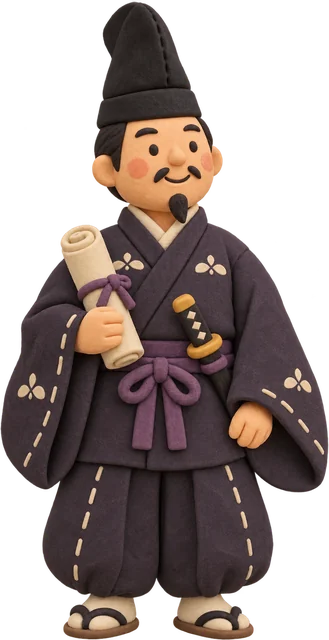
He was the shogunate army's commander in chief in the Jokyu War and took Kyoto. After becoming shikken (regent) he created the Hyojoshu (council of state) to rule by agreement, and in 1232 he set the Goseibai Shikimoku (the Joei Code), establishing law for warriors.
How can you end fighting among warriors? Yasutoki took Kyoto in the Jokyu War, and after becoming shikken (regent) he created a council for decisions by agreement and a law of 51 articles. This law became the base of warrior law for hundreds of years. His greatest achievement was writing the rules down and letting everyone know them.
More detail
Two sources checked
Why should the law apply equally to everyone? Hojo Yasutoki was Yoshitoki's eldest son, and in the Jokyu War of 1221 he led the shogunate's army into Kyoto. It is told that before setting out he asked his father, "Must I shoot an arrow at the retired emperor?" and was told, "If his banner comes, fight against it, but if the retired emperor himself comes, take off your armor and follow him."
After the war ended, Yasutoki stayed at Rokuhara in Kyoto and took charge of the aftermath. He confiscated the lands of the warriors who had sided with the retired emperor and gave them to warriors on the shogunate's side, and this land problem later caused many disputes. When his father died suddenly in 1224, Yasutoki returned to Kamakura and became shikken. His stepmother, the lady of the Iga clan, also plotted to replace the shogun, but Masako stopped it.
Instead of deciding alone, Yasutoki created a council called the Hyojoshu. Then in 1232 he made the 51-article Goseibai Shikimoku (the Goseibai Code) and put the standards for trials into writing. It is said he explained that this law was not meant to change the nobles' law, but was only a standard to keep warriors from quarreling with one another.
Yasutoki died in 1242. This law became the basis of warrior law for several hundred years afterward. Just as a school writes its rules down and tells everyone, it is an example showing that visible rules are needed to stop the powerful from doing as they please.
Life timeline
- 1213Distinguished himself at the Battle of Wada
- 1221Took Kyoto as commander of the shogunate army in the Jokyu War
- 1221Handled the aftermath as Rokuhara Tandai
- 1224Took office as the third shikken
- 1225Set up the Hyojoshu
- 1232Issued the Goseibai Shikimoku
- 1242Died