 BETA
Person
Inukai Tsuyoshi
1855–1932 · Party Politician and 29th Prime Minister · Empire of Japan
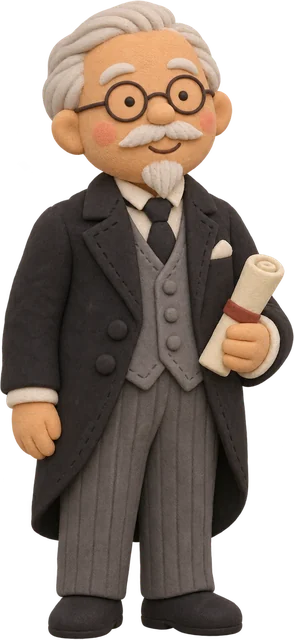
A party politician who tried to protect parliamentary politics, he became prime minister in 1931 but was shot dead by young naval officers in the May 15 Incident of 1932.
Why was Prime Minister Inukai Tsuyoshi shot? It was because he did not recognize Manchukuo, which the military had set up on its own, right away, and wanted to negotiate. On May 15, 1932, naval officers rushed into his residence and shot him. The attackers received only light punishments, and party politics came to an end. His story teaches us that violence must not be allowed to defeat politics that solves problems with words.
More detail
Two sources checked
If "If we talk, you will understand" were really his last words, why did they fail to work? Inukai Tsuyoshi, from Okayama, was a journalist and then a politician who became the face of Japanese party politics. In the movement to defend constitutional government he was called the "God of Constitutional Government."
In December 1931 he became prime minister as president of the Seiyukai. In Manchuria the army was moving ahead of the government, and Inukai did not recognize Manchukuo right away but tried to find a way to negotiate with China. To the military and the right wing, this was an obstacle.
On the evening of May 15, 1932, young naval officers burst into the prime minister's residence. It is said that he told the men pointing guns at him, "If we talk, you will understand," but the officers declared "no use talking" and fired. His last words are only handed down by tradition, so it is hard to know exactly what he said.
The greater tragedy came afterward. The culprits received light punishments, and some of the public even sympathized with them. That year party cabinets came to an end, and a "national unity" cabinet centered on the military and the bureaucracy took over.
Inukai's death is remembered as the day words lost to guns. He was a politician who tried to settle the Manchurian question through negotiation and earned the military's anger. His lesson is that to protect a society that settles problems through debate and elections, the first thing is not to take violence lightly.
Life timeline
- 1855Born in Okayama
- 1890Elected in the first general election
He then served for many years as a member of the Diet. - 1913Led the movement to defend constitutional government
- 1931Became prime minister
- 1932Put off recognizing Manchukuo
- 1932Killed in the May 15 Incident
He was attacked by young naval officers on May 15.