 BETA
Person
Ippen
1239–1289 · Wandering monk who founded the Ji sect · Kamakura Shogunate
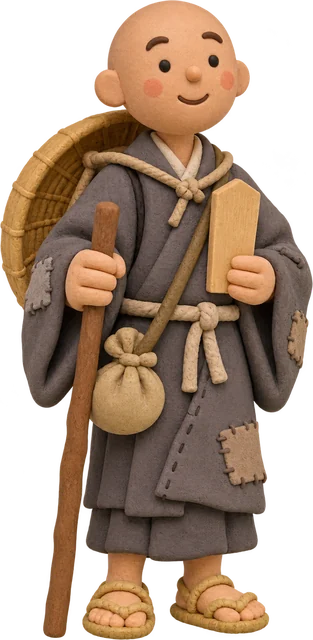
He was a monk from a samurai family in Iyo who, from 1274, traveled around the country handing out nenbutsu (Buddha's name) tags. He founded the Ji sect with a teaching of chanting the nenbutsu while dancing.
Have you ever seen a monk who chants the Buddha's name while dancing? Ippen left home, traveled around the country, and handed out nenbutsu tags. The dancing nenbutsu spread among the people, and his students founded the Ji sect. His life still lives on in the fun of festivals (matsuri).
More detail
Two sources checked
Would you believe there was a monk who gave up home and temple and lived on the road? Ippen came from a warrior family of Iyo (Ehime). His family declined after losing in the Jokyu War, and his life was greatly shaken: he became a monk when young, then returned to lay life when his father died.
In 1271 he gained an awakening in Amida faith at Zenko-ji in Shinano, and in 1274 he began his wandering together with his wife, daughter, and an attendant. After that he gave up all his property and, wherever he went, handed out nembutsu tags reading "Namu Amida Butsu, Salvation Assured, Six Hundred Thousand People." He told people to take one whether or not they had faith.
It is said that in 1279 in Shinano the "odori nembutsu," reciting the nembutsu while dancing, began. In 1282 he tried to enter Kamakura but was stopped by shogunate officials, yet many people gathered at the Katase seashore to recite the nembutsu. In this way he walked all over Japan for fifteen years.
It is said that before he died in Hyogo in 1289, he burned all the books and writings he had. His disciples carried on his teaching and opened a school called the "Ji" school. The picture scroll Ippen Hijiri-e conveys his journey.
The roads Ippen walked cover, on today's map of Japan, almost the whole country except Hokkaido. Because he shared the nembutsu directly among people, even those who could not read could understand the teaching.
That kind of excitement still remains in the culture Japanese people enjoy today, dancing at festivals (matsuri). A life of putting down what one had and walking into the midst of people still resonates today.
Life timeline
- 1239Born in Iyo
- 1271Renewed his faith at Zenko-ji
- 1274Began wandering, handing out nembutsu tags
- 1279Dancing nembutsu began in Shinano
- 1282Blocked from entering Kamakura, recited the nembutsu at Katase
- 1289Died in Hyogo