 BETA
Person
Izumo no Okuni
active 1600–1607 · Performer said to be the founder of kabuki dance · Edo Shogunate
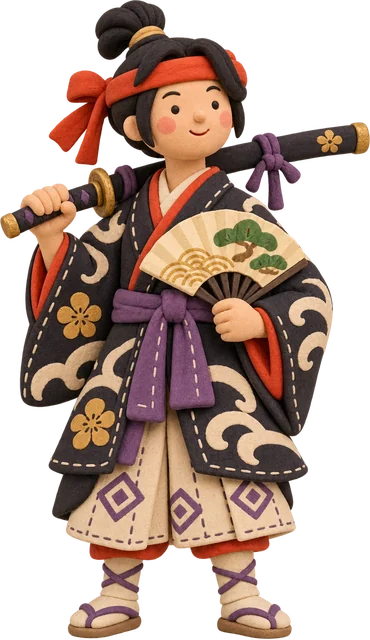
A performer who is said to have started kabuki by dancing in men's clothes in Kyoto around 1603. Her dates of birth and death are unknown.
Who started kabuki? Okuni was a performer who danced in men's clothes in Kyoto around 1603. Her birth and death are unknown, but she is said to be the beginning of kabuki. The courage to break the mold can become culture.
More detail
Two sources checked
Where did the word "kabuki" come from? Izumo no Okuni was a performer who introduced herself as a shrine maiden of Izumo Taisha. Where she was born and when she died are not known.
According to the records, it is confirmed that around 1600 a dancer named Okuni danced at the home of a Kyoto aristocrat. She is also said to have danced at Fushimi Castle in 1603, and she is said to have performed on the stage of Kitano Shrine in Kyoto and on the banks of the Shijo River.
Okuni's dance was radical. Okuni, dressed in men's clothes, acted out a love story in which she meets a woman of a teahouse. In a short dance drama, a woman playing a man's role was fresh, and people were wild about it. It is similar to the way an idol stage today becomes a talking point for its experimental costumes.
Her performance at Edo Castle in 1607 remains as the last record. After that many kabuki troupes made up only of women appeared, but in 1629 the shogunate banned women from appearing on stage on the grounds that they disturbed public morals. This is why kabuki today is made up only of male actors.
Because the records are few, Okuni's life remains a mystery, but it is clear that one performer who broke the mold on stage opened a theater culture that has continued for more than 400 years. It shows that the courage to present something new becomes culture.
Life timeline
- 1600A record remains of her dancing at a Kyoto aristocrat's home
- 1603Showed kabuki dance at Kitano Shrine and elsewhere
- 1603Is said to have also danced at Fushimi Castle
- 1607Last recorded performance, at Edo Castle
- 1629The shogunate banned women from appearing on stage
This happened after Okuni's time.