 BETA
Person
Kan'ami
1333–1384 · Pioneer of Noh and actor · Muromachi Shogunate
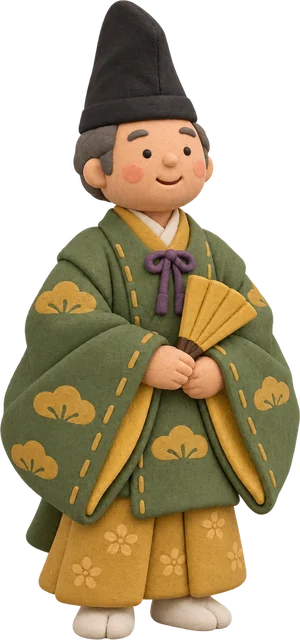
A Yamato sarugaku actor, he caught the eye of the 17-year-old shogun Yoshimitsu at a performance at Imagumano in 1374. With his son Zeami, he raised Noh to the level of an art.
What if a son becomes a star on the stage his father built? Kan'ami raised sarugaku to an art and caught the eye of Shogun Yoshimitsu in 1374. Together with his son Zeami he helped Noh grow. It is still a UNESCO Intangible Cultural Heritage today.
More detail
Under review
How would it feel if your son became a star on a stage his father built? Kan'ami was a sarugaku actor of Yamato (Nara) Province. Sarugaku was a performance shown at shrine and temple events, and it is the root of Noh.
In that era dengaku was more popular. Kan'ami took the good points of dengaku and newly made songs and dances. In particular he introduced kusemai (a rhythmic dance-song) and made stages rich in story, capturing people's hearts.
In 1374 Kan'ami performed at Imakumano in Kyoto together with his son Zeami, and by chance the seventeen-year-old Shogun Yoshimitsu, who saw this stage, was deeply moved. After that, with the shogun's patronage, Noh spread among noble and warrior society too.
In 1384 Kan'ami died while performing in Suruga Province. His son Zeami organized the teachings he had learned from his father and left them in the Fushikaden (The Transmission of the Flower of Style).
In the era when Kan'ami lived, the way of conveying a story was important. He tried to add musical interest so the audience would not be bored, and this sense led to Zeami's deep theory of Noh. He is also the one who widened sarugaku, which had been a ritual performance offered to shrines, into entertainment and art.
Today Noh is a UNESCO intangible cultural heritage. The story of a father clearing the way and a son making it bloom is a representative example of a family growing an art together.
Life timeline
- 1333Born in Yamato Province
- 1350Active in the Yuzaki troupe
- 1374Performed before Yoshimitsu at Imakumano
- 1374Appeared on stage with his son Zeami
- 1384Died in Suruga