 BETA
Person
Kato Takaaki
1860–1926 · Foreign Minister and Prime Minister · Empire of Japan
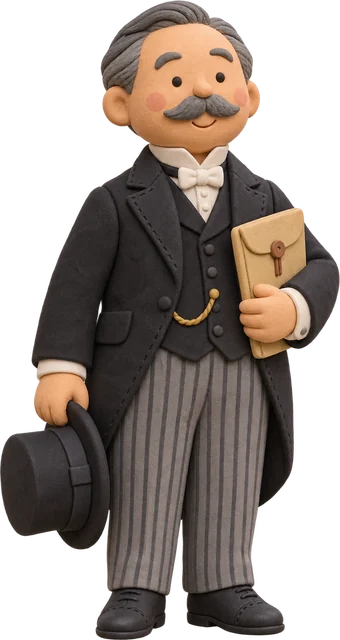
As foreign minister, Kato Takaaki presented the Twenty-One Demands to China in 1915. As prime minister, he passed the Universal Manhood Suffrage Law and the Peace Preservation Law together in 1925, leading Japanese party politics to its peak.
There was a politician who gave every man the vote and also made a law to control thoughts. Kato Takaaki made the Universal Manhood Suffrage Law in 1925 and greatly widened the right to vote, but in the same year he also made the Peace Preservation Law. Earlier, he had also presented the Twenty-One Demands to China. His story makes us think about what shrinks when freedom grows wider.
More detail
Two sources checked
If a politician both gave the vote to all men and made a law to police ideas at the same time, what was that person thinking? Kato Takaaki was born in 1860 in what is today Aichi Prefecture, graduated from the University of Tokyo, worked at Mitsubishi, and then entered politics.
He became known mainly as foreign minister. When World War I began in 1914, he led Japan into the war on the grounds of its alliance with Britain, and in 1915 he presented China with the Twenty-One Demands, which called for handing over Germany's interests to Japan and expanding rights in Manchuria. The Chinese saw this as a humiliation, and May 7 (the day of the ultimatum) came to be remembered as "National Humiliation Day."
After staying away from the front line of politics for a while, in 1924 he became prime minister of the Three-Party Cabinet to Protect the Constitution, formed together by three parties. In 1925 he passed the General Election Law giving the vote to all men aged 25 and over, increasing the number of voters nearly fourfold. But in the same year he also passed the Peace Preservation Law, which punished activities of thought such as communism. It is said to have been a compromise that widened the door to elections while policing revolutionary ideas.
He sought stability by cutting armaments and establishing diplomatic relations with the Soviet Union, but died of illness in January 1926 while still prime minister. Afterward the Peace Preservation Law became a tool for crushing political movements.
Kato's choices still ask us today the question of whether "the expansion of democracy and the restriction of freedom can come together."
Life timeline
- 1887Joined Mitsubishi
He became a son-in-law of the Iwasaki family. - 1900Became foreign minister for the first time
- 1914Foreign minister when Japan entered World War I
- 1915Twenty-One Demands to China
- 1924Became prime minister of the Three-Party Cabinet to Protect the Constitution
- 1925General Election Law and Peace Preservation Law promulgated
- 1926Died in office