 BETA
Person
Kawabata Yasunari
1899–1972 · Novelist and Nobel Prize in Literature winner · Empire of Japan
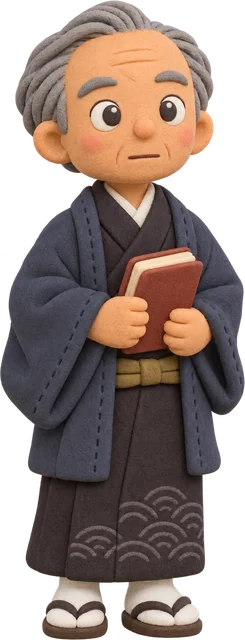
A novelist known for The Izu Dancer and Snow Country, he received the Nobel Prize in Literature in 1968 as the first Japanese winner, and died in 1972.
How did a child who lost his parents early come to win a Nobel Prize? Kawabata Yasunari lost his family one after another when he was young, and he wrote beautiful, lonely novels such as The Izu Dancer and Snow Country. In 1968 he became the first Japanese to win the Nobel Prize in Literature. He shows that even sorrow, once it becomes a story, can reach people's hearts.
More detail
Two sources checked
How did a child who lost everyone when young become one of the most famous writers in the world? Kawabata Yasunari was born in Osaka and lost his father at age two and his mother at age three. His grandmother, his grandfather, and even his older sister were lost one after another, and he grew up lonely. It is said that these experiences led to the loneliness and the keen sense of beauty found in his writing.
Studying at Tokyo University, he wrote for a literary magazine in 1921 and, with Yokomitsu Riichi and others, led the "New Sensationist" literary movement. In 1926 he published The Izu Dancer, based on an experience on a trip to the Izu Peninsula, and Snow Country, serialized from 1935, delicately portrays a love in a snowy hot-spring town and became his best-known work.
During the war he lived in Kamakura and wrote, and in 1945 he is known to have covered the Kanoya base in Kagoshima at the navy's request. After the war he is said to have remarked to the effect that "from now on I will write only of Japan's sorrow and beauty."
In 1968 he became the first Japanese to receive the Nobel Prize in Literature, and he also served as president of the Japan PEN Club. He died on April 16, 1972.
His story shows that even a great loss can become a story that reaches people's hearts. The snowy landscape left by a writer of the generation that lived through both war and beauty is still read today.
Life timeline
- 1899Born in Osaka
- 1924Graduated from Tokyo University
- 1926Published The Izu Dancer
- 1935Began serializing Snow Country
- 1945Visited a special attack base on a navy assignment
It was Kanoya in Kagoshima Prefecture. - 1968Received the Nobel Prize in Literature
He was the first Japanese winner. - 1972Died
He died on April 16.