 BETA
Person
Konoe Fumimaro
1891–1945 · Politician of noble birth, 34th, 38th and 39th prime minister · Empire of Japan
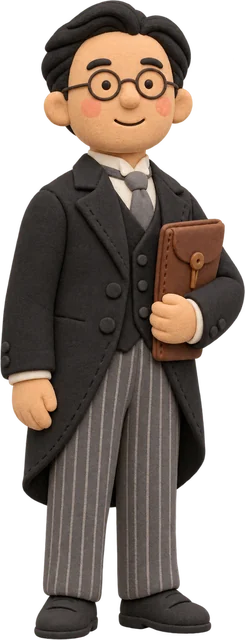
Born into a leading noble family, he served as prime minister three times. He let the Sino-Japanese War grow and led the Tripartite Pact and the New Order Movement. After the war ended, facing a summons to the war crimes trials, he took his own life.
Why could the young and popular Prime Minister Konoe Fumimaro not stop the war? Under his cabinet the Sino-Japanese War grew, political parties disappeared and the Tripartite Pact was made. He tried to negotiate with the United States but could not overcome the military and resigned, and after the war he took his own life before his trial. He shows how heavy the responsibility is of a leader who puts off decisions.
More detail
Two sources checked
Why did a young prime minister, who carried the hopes of the people, lead the country down a road with no turning back? Konoe Fumimaro came from the highest noble family, close to the imperial house, and became prime minister in 1937 at age 45. Young and popular, he was expected to be able to bring both the military and the parties together.
But during his first cabinet the Marco Polo Bridge Incident broke out and the war with China widened. In 1938 he issued a statement that "the government will not deal with the Nationalist government," which blocked the way to peace, and the National General Mobilization Law was also made at this time. In his second cabinet came the New Order movement, which dissolved all the political parties, and the Imperial Rule Assistance Association, and in 1940 Japan signed the Tripartite Pact with Germany and Italy.
In his third cabinet in 1941 he tried to avoid war through negotiations with the United States. He hoped for a summit meeting directly with Roosevelt but could not achieve it, and having also failed to coordinate with the military, he gave up the premiership in October. Then the Tojo Hideki cabinet was formed, and two months later the attack on Pearl Harbor took place.
After the war he was named a war crimes suspect by the Allied forces. On December 16, 1945, in the early morning of the day he was to enter Sugamo Prison, he took poison and ended his life.
Konoe was excellent at reading the mood but kept putting off decisions. His story makes us ask again what a leader's responsibility is, since a great current formed while everyone leaned on the hope that someone else would stop it.
Life timeline
- 1891Born in Tokyo
- 1937Became prime minister
He took office in June, and a month later the Marco Polo Bridge Incident occurred. - 1938Issued the statement "will not deal with the Nationalist government"
- 1940New Order movement and the Tripartite Pact
- 1940Imperial Rule Assistance Association founded
- 1941Failed in talks with the United States and left office
- 1945Took his own life before being summoned as a war crimes suspect
It was the early morning of December 16.