 BETA
Person
Kusumoto Ine
1827–1903 · Japan's first woman obstetrician-gynecologist in Western medicine · Edo Shogunate
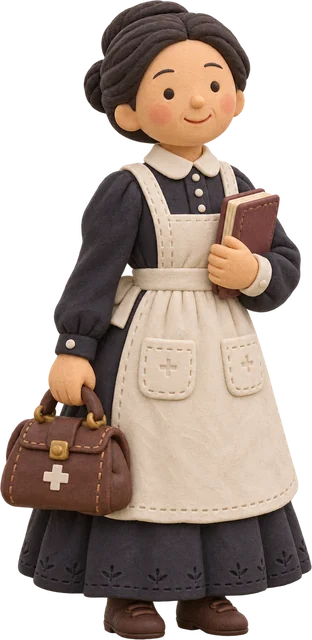
Born to Siebold and a courtesan of Nagasaki, she studied Western medicine and became an obstetrician-gynecologist. In 1870 she opened a clinic in Tokyo.
Who was Japan's first woman doctor of Western obstetrics? Kusumoto Ine was born as Siebold's daughter and studied Western medicine, and in 1870 she opened a clinic in Tokyo. She shows us the courage to climb over walls and stand on one's own ability.
More detail
Two sources checked
How did a girl with a foreign father become Japan's first woman obstetrician? Kusumoto Ine was born in 1827 in Nagasaki to the German physician Siebold and a Japanese woman, Taki. Her father was expelled from Japan when Ine was young.
Ine set out to learn Western medicine from her father's students. At a time when there was no school where a woman could study medicine, she is said to have moved among several teachers and learned the skills of obstetrics. She also had deep ties to the Uwajima area, and there is a record that she trained there.
In 1871 Ine opened an obstetrics and gynecology clinic in Tokyo. In 1884 women also became able to take the doctors' examination, but it is said she did not sit it because she already had so much practical experience. Her skill in the field was ahead of the framework of an examination made by the times.
It also draws attention that the daughter carried on the seed of Western medicine her father had left. Ine kept up continuing exchanges with people who had been her father's students, and she is said to have formed ties that connected her daughter's family with Uwajima. She was a person who held her ground at the scene of patients and childbirth in an age when Western medicine was still unfamiliar.
There is no evidence that the nickname "Oranda Oine" was used in her own day, and one explanation is that it spread through a 1970s TV drama. She died in Tokyo in 1903.
Her life, which crossed every wall of social rank, sex, and bloodline, still makes us think about how women and people with roots abroad work within a community today.
Life timeline
- 1827Born in Nagasaki
- 1828Her father Siebold was expelled from Japan
The Siebold Incident happened when Ine was about one year old. - 1854Began training under Ninomiya Keisaku
She is said to have trained for about seven years. - 1871Opened an obstetrics clinic in Tokyo
- 1903Died in Tokyo