 BETA
Person
Masaoka Shiki
1867–1902 · Haiku poet and tanka poet · Empire of Japan
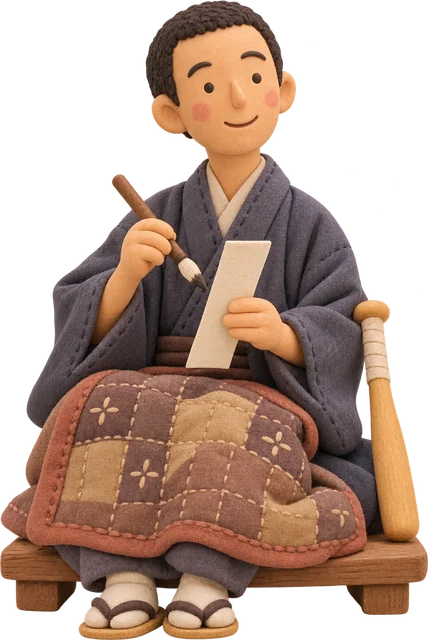
Born in Matsuyama, Masaoka Shiki coughed up blood after following the army in the Sino-Japanese War. Even on his sickbed he renewed haiku and tanka through shasei (sketching from life). He loved baseball and died in 1902 at the age of 35.
How could a person who could not move his body paint the world before his eyes so vividly? Masaoka Shiki, bedridden with tuberculosis, renewed haiku and tanka with shasei, drawing what is before one's eyes just as it is. He died at 35, but he opened a path.
More detail
Two sources checked
How could a person who could not move his body depict the world before his eyes most vividly? Masaoka Shiki was born in 1867, the son of a samurai of the Matsuyama domain. He lost his father early, but his skill with writing got him into Tokyo Imperial University, where he grew close to his friend Natsume Soseki.
In 1892 he joined the newspaper Nippon and argued for renewing haiku. In place of old, stereotyped verses, he put forward 'shasei' (sketching from life), which depicts what is before one's eyes just as it is. In 1895 he went along to the Sino-Japanese War as a reporter, coughed up blood on the ship home, and as his tuberculosis deepened he spent many days lying in bed afterward.
The illness spread to his spine and he could not walk, but he never put down his brush. In 1897 he laid the foundations of the haiku magazine Hototogisu, and in 1898 he serialized Kajin ni Atauru Sho (Letters to a Tanka Poet), calling for the renewal of tanka. Takahama Kyoshi, Ito Sachio, and others came from his circle. He also loved baseball very much, and there is an anecdote that he translated its terms and spread them.
Writing his sickbed diary Byosho Rokushaku (Six Feet of a Sickbed), he calmly noted the things he could see even in pain, and he died in September 1902 at the age of thirty-five.
His life was short, but he changed the way poetry is written. That we can today put the scenery before our eyes into short words is also thanks to the road he pointed out.
Life timeline
- 1892Joins the newspaper Nippon
- 1895Accompanies the Sino-Japanese War and coughs up blood
- 1897Lays the foundations of Hototogisu
- 1898Serializes Kajin ni Atauru Sho (Letters to a Tanka Poet)
- 1899Publishes Haiku Taiyo (Outline of Haiku)
- 1902Dies