 BETA
Person
Masukawa Toshihide
1940–2021 · Theoretical physicist and Nobel Prize winner in Physics · State of Japan
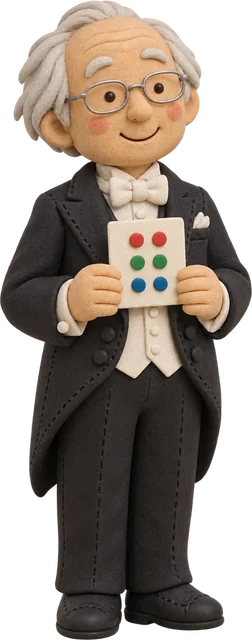
In 1973 Masukawa Toshihide and Kobayashi Makoto published a theory that there must be at least six kinds of quarks to explain the breaking of symmetry. For this work he received the Nobel Prize in Physics in 2008.
Why didn't matter and antimatter disappear together? In 1973 Masukawa Toshihide and Kobayashi Makoto published a theory that there must be six or more kinds of quarks. Experiments later confirmed it was right, and he received the Nobel Prize in Physics in 2008. The power to imagine what lies beyond what we can see helps science grow.
More detail
Two sources checked
Why did matter and antimatter not vanish equally, leaving our world behind? Masukawa Toshihide was born in Nagoya on February 7, 1940. He graduated from the Faculty of Science at Nagoya University in 1962 and finished graduate school in 1967, becoming a Doctor of Science.
In 1973, while researching at Kyoto University, he published, with Kobayashi Makoto, a paper saying that at least six kinds of quarks must exist to explain the difference between particles and antiparticles (the breaking of CP symmetry). Since only three kinds of quarks were known at the time, it was a bold claim.
Afterward, new quarks were discovered one by one in experiments and this theory was proved. In 1976 he became an assistant professor at the Institute for Nuclear Study, University of Tokyo, and in 1980 a professor at the Research Institute for Fundamental Physics at Kyoto University, where he served as director in 1997 to 2003. In 2003 he became a professor at Kyoto Sangyo University.
In 2008 he shared the Nobel Prize in Physics with Kobayashi and in the same year also received the Order of Culture. In 2010 he became a member of the Japan Academy, and in July 2021 he died in Kyoto.
He did not stop at establishing one theory; he discussed at length with younger researchers how the world of quarks was composed. Serving as director of Kyoto University's Research Institute for Fundamental Physics was also a post meant to lead that research culture.
In today's terms, it is as if he predicted in advance, and got right, that three more game characters not yet released had to exist for the story to fit. The power to imagine beyond what we see pushes science forward.
Life timeline
- 1940Born in Nagoya
February 7. - 1962Graduated from the Faculty of Science at Nagoya University
Studied physics. - 1967Completed graduate school; Doctor of Science
Began theoretical research. - 1973Kobayashi-Masukawa theory
Predicted that six or more kinds of quarks are needed. - 1980Professor at the Research Institute for Fundamental Physics at Kyoto University
Became director in 1997 to 2003. - 2008Nobel Prize in Physics, Order of Culture
Shared with Kobayashi Makoto. - 2010Member of the Japan Academy
Recognized by the academic world. - 2021Died
July 23, in Kyoto.