 BETA
Person
Matsumoto Seicho
1909–1992 · Novelist (social mystery fiction) · State of Japan
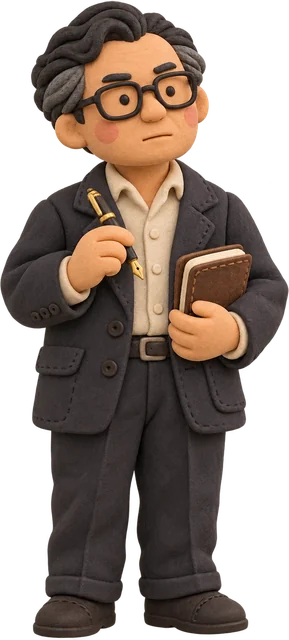
Matsumoto Seicho had neither a smooth education nor a smooth career. He became a writer in his forties and, with Ten to Sen (Points and Lines), set off a boom in "social mystery fiction" that digs into society's corruption and structure. He also worked on nonfiction such as Showa-shi Hakkutsu (Excavating Showa History).
How did an ordinary office worker become a mystery writer after the age of forty? Matsumoto Seicho grew up in hardship and worked at a newspaper company, won the Akutagawa Prize in 1953, and in 1958 set off a boom in mystery novels that dig into social problems with Ten to Sen (Points and Lines). He also worked on historical records with Showa-shi Hakkutsu (Excavating Showa History). Even if you start late, stories open a path when you observe with patience.
More detail
Two sources checked
How did an ordinary office worker become Japan's leading mystery writer after the age of forty? Matsumoto Seicho was born in Fukuoka Prefecture on December 21, 1909. After finishing higher elementary school in 1924 he lived working at many jobs such as office boy and printing-shop illustrator. His circumstances did not allow him to go on to higher school.
In 1939 he joined the advertising department of the Asahi Shimbun's Western head office as a hired employee, and around 1950 to 1951 Saigo Satsu (The Saigo Banknote) was selected in a weekly magazine's prize-fiction contest and a path opened. In 1952 to 1953 he won the Akutagawa Prize for Aru "Kokura Nikki" Den (The Story of a "Kokura Diary"). In 1956 he left the newspaper company and devoted himself to writing.
In 1958 Ten to Sen (Points and Lines) and Me no Kabe (Wall of Eyes) became very popular as books. Going a step beyond the fun of finding the criminal, they dealt with how the structures of bureaucracy, business, and society create crimes, setting off a boom in "social school mystery fiction." In works such as Nihon no Kuroi Kiri (Black Mist over Japan) he also took interest in unsolved cases from around the Occupation period.
In 1963 he became chairman of the Mystery Writers of Japan, and in 1967 he won the first Yoshikawa Eiji Prize for Literature and in 1970 the Kikuchi Kan Prize for Showa-shi Hakkutsu (Excavating Showa History). He died in Tokyo in August 1992.
In today's terms, he was someone who won by patient observation without a prestigious academic pedigree. It shows that even if the road is roundabout and you start late, a story is waiting for you.
Life timeline
- 1909Born in Fukuoka Prefecture
December 21. - 1924Various jobs after higher elementary school
Worked as an office boy, a printing-shop illustrator, and more. - 1939Joined the Asahi Shimbun's Western head office
A hired employee in the advertising department (some say 1937). - 1950Saigo Satsu selected
A path opened through prize fiction. - 1953Akutagawa Prize
For Aru "Kokura Nikki" Den. - 1956Left the newspaper company and became a full-time writer
Devoted himself to writing. - 1958Ten to Sen and Me no Kabe
A boom in social school mystery fiction arose. - 1992Died
August 4, in Tokyo.