 BETA
Person
Nitobe Inazo
1862–1933 · Educator and international figure · Empire of Japan
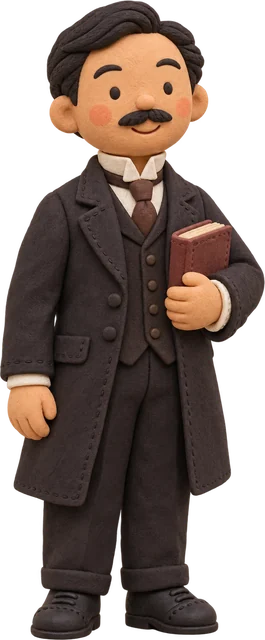
Born in Morioka, Nitobe Inazo became a Quaker in the United States and introduced Japan to the world by writing Bushido in English in 1900. After serving as principal of the First Higher School, he worked as Under-Secretary-General of the League of Nations from 1920.
How should you begin when explaining Japan to Westerners? Nitobe Inazo wrote Bushido (the way of the samurai) in English to share the spirit of Japan, and he worked for peace as Under-Secretary-General of the League of Nations. To be a bridge between two cultures, you must be able to explain things in each other's words.
More detail
Two sources checked
To explain Japan to Western people, with what words should one begin? Nitobe Inazo was born in 1862 into a samurai family of the Nanbu domain (today's Morioka, Iwate Prefecture). While studying at the Sapporo Agricultural College, he became a Christian together with Uchimura Kanzo and others.
In 1884 he left the University of Tokyo without finishing, studied agricultural economics in the United States and Germany, and became a Quaker (a pacifist Christian). In the United States he met his wife Mary and married her. He returned to Japan in 1891 and worked as a professor at the Sapporo Agricultural College and Tokyo Imperial University.
In 1899-1900, while recovering from illness in California in the United States, he wrote Bushido in English to answer his Western friends, who asked, 'Japan has no religious education, so how do you teach morality?' The book, which explained the virtues of the samurai such as honesty, courage, and compassion, became known widely enough that even US President Roosevelt read it. It was also criticized for idealizing Japan too much.
From 1906 to 1913 he promoted character education as principal of the First Higher School. In 1920, with the founding of the League of Nations, he became Under-Secretary-General and worked for international cooperation, and in 1933 he attended a conference in Canada and died in Victoria. His face was once also on the 5,000-yen note.
To be a bridge between two cultures, you must first know your own culture deeply and be able to explain it in the other's words. This is the lesson he left.
Life timeline
- 1881Graduates from the Sapporo Agricultural College
- 1884Studies in the United States and becomes a Quaker
- 1891Returns home and works as a professor
- 1900Publishes Bushido in English
- 1906Principal of the First Higher School
- 1920Under-Secretary-General of the League of Nations
- 1933Dies in Canada