 BETA
Person
Oda Nobunaga
1534–1582 · Daimyo of the Sengoku Period · Oda and Toyotomi Regime
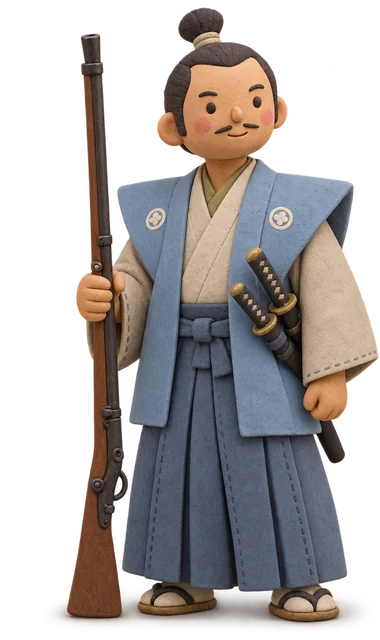
Born in 1534 into a small daimyo family in Owari, he made his name at the Battle of Okehazama and with matchlock guns, and ended the Muromachi shogunate in 1573. But on the verge of unifying Japan, he was killed in 1582 at Honno-ji in an attack by his own retainer. He was a Sengoku daimyo.
How did a boy once called a “fool” open the way to the unification of Japan? Oda Nobunaga was a daimyo of the Sengoku period who defeated a huge army at the Battle of Okehazama, made great use of matchlock guns, and allowed free trade. He ended the Muromachi shogunate in 1573, but on the verge of unification he was attacked and killed by his own retainer at Honno-ji in 1582. A new attempt can last longer than one person's life.
More detail
Two sources checked
How did a boy once called a “fool” open the way to the unification of Japan? Oda Nobunaga was born in 1534 into a small daimyo family in Owari (today's Aichi Prefecture). As a child, his odd behavior sometimes got him called a “fool.”
But at the Battle of Okehazama in 1560, everything flipped. He beat the army of the far larger Imagawa Yoshimoto and made his name. It is like the story of the smallest group in a class beating the biggest one. In 1568 he entered Kyoto supporting Ashikaga Yoshiaki, and in 1573 he drove that same Yoshiaki out and ended the Muromachi shogunate.
Nobunaga also used new methods. At the Battle of Nagashino in 1575 he used matchlock guns on a large scale, and in 1576 he built Azuchi Castle. He also carried out the Rakuichi and Rakuza policies, which let anyone trade freely. On the other hand, he harshly crushed opposing Buddhist powers, even burning Enryaku-ji on Mount Hiei. He was a man with both a side that opened things up and a side that pressed down hard.
In 1582, when he had taken almost the whole center of Japan, he was attacked by his retainer Akechi Mitsuhide and died at Honno-ji in Kyoto. It was a regrettable end, coming from a retainer's attack with unification so close. The fact that the people after him joined Japan together on the road he opened shows us that a new attempt can last longer than one person's life.
Life timeline
- 1560Won the Battle of Okehazama
- 1571Burned Enryaku-ji on Mount Hiei
Related events
- 1467Sengoku (Warring States) Period
- 1560Battle of Okehazama: Oda Nobunaga's Surprise Attack
- 1568Nobunaga Enters Kyoto and the Fall of the Muromachi Shogunate
- 1575Battle of Nagashino
- 1576Construction of Azuchi Castle
- 1580Honganji Leaves Ishiyama and the End of the Ishiyama War
- 1582The Honno-ji Incident
- 1582The Battle of Yamazaki