 BETA
Person
Oe no Hiromoto
1148–1225 · Early adviser to the shogunate · Kamakura Shogunate
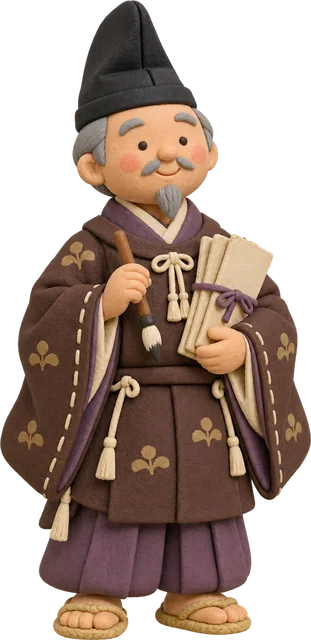
A low-ranking official in Kyoto, he was invited by Yoritomo to Kamakura, where he proposed the posts of shugo and jito (military governors and land stewards) and became head of the Mandokoro (the administrative office). Together with the Hojo family he was the civil official who built the framework of the shogunate's administration.
In an age of swords, what power did the pen have? Hiromoto was an official in Kyoto who was called to Yoritomo and proposed setting up shugo and jito. During the Jokyu War he urged attacking Kyoto right away. Thanks to his system, the shogunate was able to last long.
More detail
Two sources checked
Why did a government of sword-carrying warriors badly need an adviser who carried a pen? Oe no Hiromoto was an official who handled documents at the imperial court in Kyoto. He came from the Oe family, famous for scholarship, and around 1184 he answered Yoritomo's call, went down to Kamakura, and became head of the Kumonjo (the Documents Office).
The shogunate had only just been born and had neither written laws nor a channel for communicating with the court. Hiromoto filled that gap. He took on the role of conveying Yoritomo's wishes to the court, and it is said that in 1185, on the grounds of hunting down Yoshitsune, he proposed placing shugo (provincial governors) and jito (estate stewards) across the country. This system became the channel through which the shogunate's power spread throughout the land.
After Yoritomo died, as head of the Mandokoro (the Administrative Board), he led affairs together with Masako and Yoshitoki. When Wada Yoshimori rose in revolt in 1213, he even became a target of the attack. In the Jokyu War of 1221, it is said that he stayed in Kamakura and gave the bold opinion that an army should be sent to strike Kyoto at once. His eldest son happened to side with the retired emperor, but the shogunate won in the end.
Hiromoto died in 1225. He showed that even in the age of the sword, documents and institutions move a country. It resembles the idea that the clerk who writes down the class rules at school has a role that actually lasts longest.
Life timeline
- 1184Went down to Kamakura and became betto (head) of the Kumonjo
- 1185Proposed appointing shugo and jito
- 1191Became betto when the Mandokoro was opened
- 1213Helped the shogunate at the Battle of Wada
- 1217Became a monk and was called Kakua
- 1221Argued for attacking Kyoto in the Jokyu War
- 1225Died