 BETA
Person
Okuma Shigenobu
1838–1922 · Statesman and founder of Waseda University · Empire of Japan
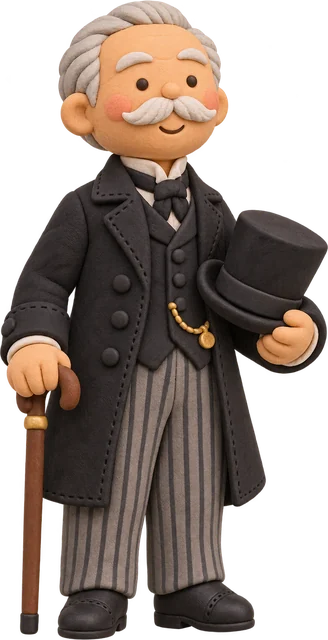
Born in Saga, Okuma Shigenobu was driven out in the Political Crisis of 1881 and then founded a political party and Waseda University. He led the first party cabinet in 1898 and a second cabinet in 1914, and he kept up politics even after losing a leg.
There was a man who kept up politics even after losing a leg. Okuma Shigenobu called for opening the Diet quickly and was pushed out of the government in 1881, then founded a political party and Waseda University. He lost a leg to a bomb in 1889, yet he formed the first party cabinet in 1898 and became prime minister again in 1914. He showed that one can change the country from outside the government too.
More detail
Two sources checked
Would you believe that there was a man who lost a leg and still remained foreign minister? Okuma Shigenobu was born in 1838 in the Saga domain, learned English and Western studies, and made his name in the Meiji government as a key official in charge of finance.
From early on he argued, "Let's open the Diet quickly." Ito Hirobumi and others inside the same government were on the side of going slowly. In 1881, when public opinion boiled over the cheap sale of government land (the Hokkaido Colonization Office), Okuma was suspected of stirring it up behind the scenes and was expelled from the government. This is called the Political Crisis of Meiji 14.
After being expelled, he founded the Rikken Kaishinto in 1882 and set up the Tokyo Senmon Gakko (today's Waseda University), pressing the government from outside in both politics and education. He returned in 1889 as foreign minister in charge of treaty revision talks, but a bomb thrown by a young man angry at the plan to appoint foreign judges cost him his right leg, and the negotiations stopped.
In 1898 he joined hands with Itagaki Taisuke and formed Japan's first party cabinet, but it collapsed after four months from internal quarrels. Then in 1914, at the age of seventy-six, he became prime minister again and took part in World War I, and in 1915 he presented the Twenty-One Demands to China, which provoked great anger among the Chinese.
Okuma walked two paths, as a politician and as an educator. Waseda University still produces many people today, and the theme he raised of "parliamentary politics" became a foundation of democracy today.
Life timeline
- 1868Joined the Meiji government
He handled finance and foreign affairs. - 1881Expelled from the government
The Political Crisis of Meiji 14. - 1882Founded the Rikken Kaishinto and the Tokyo Senmon Gakko
- 1889Lost his right leg in a bomb attack
It happened during treaty revision talks. - 1898Formed the first party cabinet
He did so together with Itagaki. - 1914Became prime minister for the second time
- 1915Twenty-One Demands to China
His cabinet pushed them.