 BETA
Person
Ouchi Yoshihiro
1356–1399 · Daimyo of Western Japan · Muromachi Shogunate
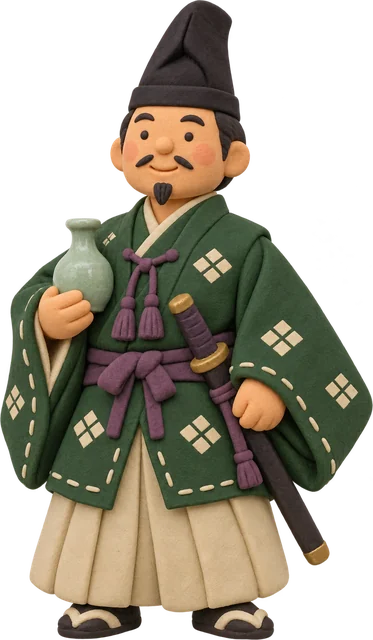
As the shugo (provincial governor) of six provinces including Suo and Nagato, he built a large power base in western Japan and traded actively with Joseon. He claimed to be a descendant of the royal family of Baekje, but in 1399 he was defeated by Shogun Yoshimitsu in the Oei Rebellion and died.
Which daimyo (regional lord) was closest to the Korean Peninsula? Yoshihiro ruled six provinces and traded actively with Joseon. He claimed that his ancestor was a king of Baekje. In 1399 he stood against Yoshimitsu and was defeated.
More detail
Under review
Who was the daimyo closest to the Korean peninsula? Ouchi Yoshihiro was head of the Ouchi family, based in Yamaguchi. This family had long claimed to be descendants of Prince Imseong (Rinsei), the third son of King Seong of Baekje.
In 1371 he helped Imagawa Ryoshun's pacification of Kyushu and became shugo of Buzen, and in the Meitoku Rebellion of 1391 he sided with Shogun Yoshimitsu, pressed down the Yamana clan, and even gained the lands of Izumi and Kii. The next year he mediated the reconciliation of the Southern and Northern Courts and won merit in bringing about their union. In this way he became shugo of six provinces in all.
From 1379 Yoshihiro had exchanges with Goryeo and then Joseon. He cracked down on the wako, sent back captives, and asked for items such as Buddhist scriptures, sending envoys to obtain the Tripitaka (Buddhist canon). There is also a record that he asked Joseon for land, saying his ancestor was a king of Baekje. Joseon did not accept this.
As sea trade became important, Yoshimitsu tried to manage trade with Ming directly, and Yoshihiro's power gradually became a burden. In 1399 Yoshihiro joined hands with the Kamakura kubo and raised an army at Sakai in Izumi (the Oei Rebellion), but his castle was surrounded and he died in battle.
His story shows how a daimyo at the western end of Japan was connected to the Korean peninsula. Today in Yamaguchi, temples he built and traces of Joseon culture remain.
Life timeline
- 1371Took part with Imagawa Ryoshun in pacifying Kyushu
- 1379Began exchanges with Goryeo
- 1391Helped Yoshimitsu in the Meitoku Rebellion
- 1392Mediated the union of the Southern and Northern Courts
- 1397Asked Joseon for land and exchange (including tradition)
- 1399Died in battle in the Oei Rebellion