 BETA
Person
Ri Koran
1920–2014 · Singer and actress, later a member of the House of Councillors · Empire of Japan
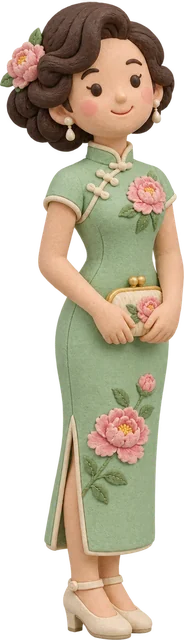
She was a Japanese woman who became a star of the Manchukuo Film Association under the Chinese name Li Xianglan. After the war, a Chinese trial confirmed that she was Japanese, and she returned to Japan. Later she became a member of the House of Councillors.
Why would a Japanese person sing under a Chinese name? Yamaguchi Yoshiko became the Manchukuo Film Association star "Li Xianglan," but the fact that she was Japanese was kept hidden. After the war she came back to Japan and became a member of the House of Councillors. Her story shows that a person's name can be used for politics.
More detail
Two sources checked
What must it have felt like to have to hide which country one came from and sing? Yamaguchi Yoshiko was born in 1920 near Fengtian (now Shenyang) in Manchuria to Japanese parents. She became the adopted daughter of a Chinese friend of her father, received the Chinese name Li Xianglan (Ri Koran in Japanese reading), and learned Chinese in Beijing.
In 1938 she debuted as an actress of the Manchurian Film Association (Man'ei). The association made her a symbol of friendship between Japan and China and did not reveal that she was Japanese. Films such as Song of the White Orchid (1939) and China Nights (1940) were great hits in Japan, and songs such as Ye Lai Xiang were also widely sung. But such films are also criticized for having made Japanese aggression look beautiful.
After the war, in China she was suspected of being a "traitor to the homeland" and was brought to trial. But her Japanese nationality was proved, and she returned to Japan in 1946. Afterward she appeared in films under the name Yamaguchi Yoshiko, and in 1950 she also worked in the United States.
In 1974 she became a member of the House of Councillors, served three terms over 18 years, and held posts such as parliamentary vice minister for the environment, and she was also involved with questions of war responsibility and the comfort women issue. She died on September 7, 2014, at age 94.
Her life shows how greatly one person's identity can be used by war and politics. It makes us think that more important than a name or a face is the courage to tell the facts in one's own voice.
Life timeline
- 1920Born in Fengtian, Manchuria
- 1938Debuted as Li Xianglan at the Manchurian Film Association
- 1940China Nights became a great hit
- 1946Her Japanese nationality was confirmed and she returned to Japan
- 1950Worked in the United States
- 1974Became a member of the House of Councillors
She served three terms until 1992. - 2014Died
It was September 7.