 BETA
Person
Shakushain
?–1669 · Ainu Chief · Edo Shogunate
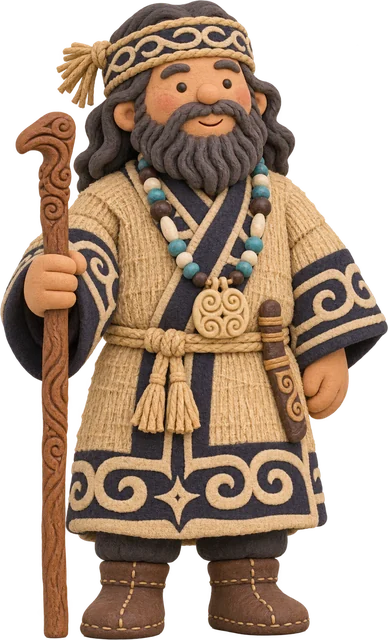
The chief of the Shibechari Ainu, who led the Ainu in a fight in 1669 against the unfair trading of the Matsumae domain, but was killed at a peace meeting.
Why did the Ainu rise up? In 1669 Shakushain led the Ainu against the unfair trade of the Matsumae domain, but he was killed at a peace meeting. His story asks how we should remember the voices of minority peoples.
More detail
Two sources checked
Why did the Ainu people rise up against the people across the sea? Shakushain is known as the chief of Shibechari, around Shizunai (now Shin-Hidaka) in Hokkaido, born around 1606. It is said that he became chief in 1653.
At that time the Ainu traded salmon and furs for goods such as rice and ironware through the Matsumae domain. But the exchange rate gradually turned against the Ainu. Meanwhile, Ainu groups also quarreled with each other over hunting grounds along the rivers. In 1668 Shakushain defeated his rival Onibishi.
In 1669 Utafu, a relative of Onibishi, went to Matsumae to ask for help and died on the way back. A rumor spread among the Ainu that Matsumae had poisoned him, and this grew into a great uprising. Shakushain led the Ainu and fought in many places, and a record says about 300 wajin (Japanese) were killed. It was as if the long-held grievances of villages that could not get as many iron tools as they wanted burst out all at once.
The Matsumae side even borrowed the troops of several Tohoku domains to oppose them. In the end, at a peace meeting, Shakushain was deceived and killed. This happened in the autumn of 1669. Afterward Matsumae forced a harsher rule on the Ainu.
In 1970 Ainu and Japanese donors put up a statue of him, but in 2018 the worn original was removed. It is a story that asks how the voice of the Ainu should be remembered even now.
Life timeline
- 1653Became chief of Shibechari
- 1668Defeated Onibishi
- 1669Rose up against the Matsumae domain
- 1669Killed at the peace meeting
- 1970A statue was erected
This was 300 years after his death.