 BETA
Person
Shirase Nobu
1861–1946 · Explorer and Soldier · Empire of Japan
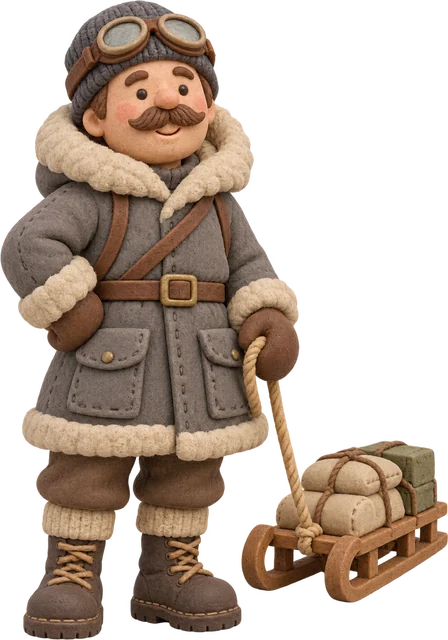
Shirase Nobu, from Akita, spent a winter on the 1893 Kuril Islands expedition. He then changed his goal from the North Pole to the South Pole and set out in 1910 aboard the Kainan Maru. In 1912 he reached 80 degrees 5 minutes south and named the area the Yamato Snow Plain.
How did the explorer who missed the North Pole end up going to Antarctica? Shirase Nobu raised money without government help and set out in 1910 aboard the Kainan Maru. In 1912 he reached 80 degrees 5 minutes south in Antarctica and named the area the Yamato Snow Plain. A challenge is not measured by success alone.
More detail
Two sources checked
What was in the mind of an explorer who missed the North Pole and then changed course to the South Pole? Shirase Nobu was born in 1861 in a temple family in Akita Prefecture. A story says that from childhood he declared he would be an explorer. After becoming an army soldier, he went into the reserves early, took part in Gunji Shigetada's 1893 exploration of the Chishima (Kuril) Islands, and spent the winter on Shumshu Island.
Afterward he planned to challenge the North Pole, but when news came in 1909 that an American expedition had reached the North Pole first, he changed his goal to the South Pole. He had almost no government support. With help from Okuma Shigenobu and newspaper and magazine companies, he raised money with difficulty and obtained a small ship, the Kainan Maru. The name means 'opening the south.' It is said that Togo Heihachiro gave it the name.
In November 1910 he left Shinagawa with 26 crew members for the Antarctic. The first attempt was blocked by ice and failed, but after spending the winter in Sydney, Australia, he set out again and in January 1912 landed on the Antarctic continent. There, with sled dogs, he advanced to 80 degrees 5 minutes south latitude and named the snowy plain 'Yamato Yukihara' (Yamato Snow Plain). Among the crew were two Ainu men from Sakhalin, who are said to have played a large part through their skill in handling the dog sleds.
He returned safely, but a large debt remained and Shirase struggled for a long time. He died in 1946 at the age of eighty-five.
The value of a challenge is not measured by success alone. Even if one turns back before the destination, the courage of the people who shared the journey is worth remembering.
Life timeline
- 1893Joins the Chishima expedition and winters on Shumshu Island
- 1909Changes his North Pole plan to the South Pole
- 1910Leaves Shinagawa on the Kainan Maru
- 1912Reaches 80 degrees 5 minutes south and names the Yamato Snow Plain
This was on January 28. - 1912Returns to Japan
- 1946Dies