 BETA
Person
Ashikaga Yoshimitsu
1358–1408 · Third Shogun of the Muromachi Shogunate · Muromachi Shogunate
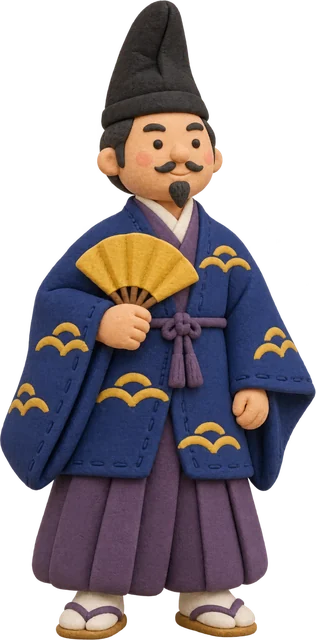
The shogun of the Muromachi Shogunate's peak, who joined the Northern and Southern Courts into one, opened trade with Ming China, and also exchanged envoys with Joseon.
Ashikaga Yoshimitsu was the shogun who made the Muromachi Shogunate strongest. He joined the two divided courts into one and built the Golden Pavilion. He opened trade with Ming China and also exchanged envoys with Joseon.
More detail
Two sources checked
Ashikaga Yoshimitsu was born in 1358 as the son of the second shogun Yoshiakira. When his father died in 1367 he inherited the family at the age of ten, and at the end of the next year he became shogun. In his childhood the kanrei Hosokawa Yoriyuki helped with government.
When he grew up, Yoshimitsu built the 'Hana no Gosho' (Palace of Flowers) in Muromachi, Kyoto, and governed from it. That is why this shogunate is called the 'Muromachi shogunate.' He subdued the powerful shugo daimyo one after another, and in 1392 he united the Southern and Northern Courts, which had been divided for nearly 60 years.
Even after handing the post of shogun to his son Yoshimochi in 1394, he became daijo-daijin (Chancellor) and kept real power, and he built the Golden Pavilion (Rokuon-ji) at Kitayama in Kyoto. The splendid culture of this period is called 'Kitayama culture,' and the Noh of Kan'ami and Zeami also enjoyed his protection.
Abroad, he sent envoys to Ming China, received investiture as 'King of Japan,' and opened tally (kango) trade. He also exchanged envoys with Joseon, newly founded at the same time, and discussed the control of the wako and the return of people who had been taken away. This relationship of dealing with neighboring countries on equal terms was called 'gyorin' in Joseon. Yoshimitsu died in 1408.
Life timeline
- 1369Became shogun
- 1378Built the Hana no Gosho in Muromachi
- 1392United the Northern and Southern Courts
- 1394Handed the post of shogun to Yoshimochi
- 1397Began building the Golden Pavilion at Kitayama
- 1404Began tally trade with Ming China
Related events
- 1336The Northern and Southern Courts Period
- 1374The Perfection of Noh
- 1378Hana no Gosho: Yoshimitsu's Muromachi Mansion
- 1386The Gozan System: Ranking the Rinzai Zen Temples
- 1391Meitoku Rebellion: The Fall of the Yamana Clan
- 1397Kinkaku-ji and Ginkaku-ji
- 1399Oei Rebellion: The Defeat of Ouchi Yoshihiro
- 1401Yoshimitsu Is Named King of Japan
- 1404Tally Trade Between the Muromachi Shogunate and Ming China