 BETA
Person
Tokugawa Iemitsu
1604–1651 · Third Shogun of the Edo Shogunate · Edo Shogunate
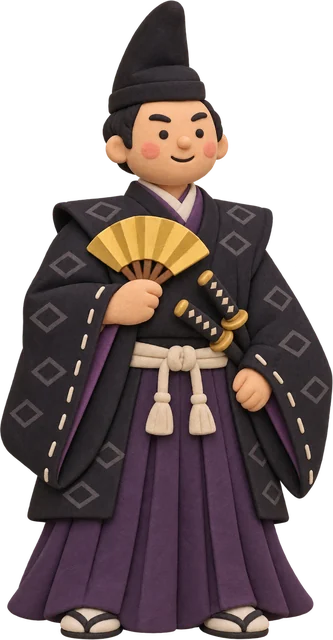
The third shogun, who made sankin-kotai a system, completed the seclusion policy, and received Joseon missions three times.
Tokugawa Iemitsu was the third shogun of the Edo Shogunate. He made sankin-kotai, which made daimyo live by turns in Edo and on their own lands. He narrowed contact with other countries, but he welcomed Joseon missions three times.
More detail
Two sources checked
Tokugawa Iemitsu was born in 1604 as the second son of Hidetada. His childhood name was Takechiyo. He became shogun in 1623, and after his father died in 1632 he led the government himself.
Iemitsu is famous for the story that he said 'I am a shogun from birth.' In 1635 he revised the Buke Shohatto and made 'sankin-kotai' (alternate attendance) a system, in which the daimyo lived alternate years in Edo and on their own lands. The daimyo's wives and children had to stay in Edo. With this system the shogunate kept firm hold of the daimyo, and post towns and roads developed along the routes they traveled.
He also strictly banned Christianity. When the 'Shimabara-Amakusa Rebellion' broke out in Kyushu in 1637-1638 he put it down, and in 1639 he barred Portuguese ships from coming. In 1641 he moved the Dutch trading post to Dejima in Nagasaki, and the so-called 'sakoku' (national isolation) system, in which contact with foreign countries took place only at set places, was completed. It was also Iemitsu who greatly rebuilt Nikko Toshogu, which enshrines his grandfather Ieyasu.
Although he narrowed the doors to foreign countries, exchange with Joseon continued. While Iemitsu was shogun, Joseon missions came to Edo in 1624, 1636 and 1643. From 1636 their name changed to 'tongsinsa' (envoys of trust), carrying the meaning of envoys who share trust between the two countries. Iemitsu died in 1651.
Life timeline
- 1623Became shogun
- 1624Received a Joseon mission
- 1635Made sankin-kotai a system
- 1636Received the Joseon tongsinsa
- 1637The Shimabara-Amakusa Rebellion broke out
- 1641Moved the Dutch trading post to Dejima
- 1643Received the Joseon tongsinsa
Related events
- 1615Enactment of the Laws for the Military Houses (Buke Shohatto)
- 1631The Hosho Ship System and the Ban on Overseas Travel
- 1635The Sankin-kotai System
- 1637The Shimabara Rebellion
- 1639National Seclusion and Dejima