 BETA
Person
Tokugawa Iesada
1824–1858 · 13th Shogun of the Edo Shogunate · Edo Shogunate
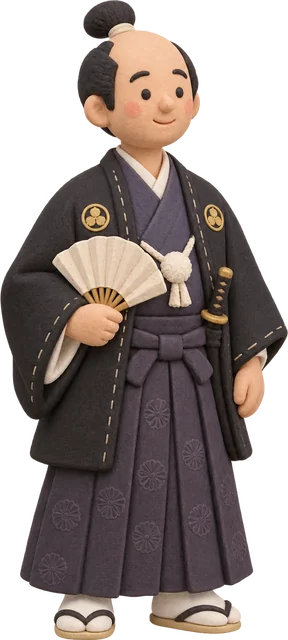
The shogun when the Japan-US Treaty of Peace and Amity was made, whose succession problem grew into a struggle within the shogunate.
Tokugawa Iesada was the shogun when Japan made a treaty with the United States and opened its ports. He was in poor health, so his retainers handled the government. He had no son, so a big dispute arose over who would be the next shogun.
More detail
Two sources checked
Tokugawa Iesada was born in 1824 as the fourth son of Ieyoshi, and became shogun in 1853 after his father died. He was in poor health, so government was handled by senior councillors such as Abe Masahiro and Hotta Masayoshi.
In 1854, while he was shogun, the shogunate concluded the Treaty of Peace and Amity between the United States and Japan with Perry, who had returned, and opened the ports of Shimoda and Hakodate. The system of national isolation, which had lasted more than 200 years, began to collapse. In 1858 the tairo Ii Naosuke concluded the 'Treaty of Amity and Commerce between the United States and Japan' without the emperor's permission.
Iesada had no son, so the side backing Hitotsubashi Yoshinobu and the side backing Yoshitomi of Kii (later Iemochi) fought bitterly (the shogun succession dispute). Ii Naosuke chose Yoshitomi as successor, and Iesada died in 1858. His wife Atsuhime (Tenshoin) came from the Satsuma family and left her name in history afterward.
Life timeline
- 1853Became shogun
- 1854Concluded the Treaty of Peace and Amity between the United States and Japan
- 1858Concluded the Treaty of Amity and Commerce between the United States and Japan