 BETA
Person
Suisho
active 107 CE · Wa King Who Sent an Envoy to the Later Han · Small States of Wa
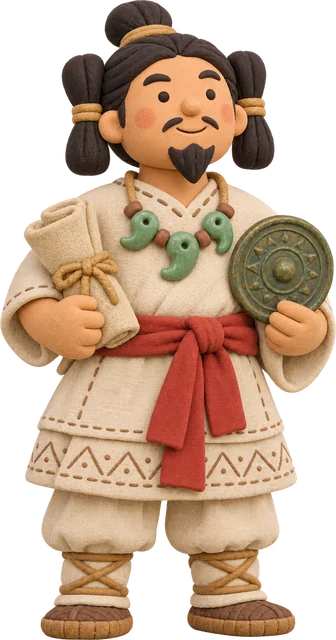
The Wa king who, according to the Hou Hanshu (Book of the Later Han), offered 160 people to Emperor An of the Later Han in 107 and asked for an audience with the emperor. It is the second record of a Wa king sending an envoy to China, after the gold seal given to Na in 57, and scholars still disagree about how his name is written and where his country was.
Why did a king of Wa go to meet the Chinese emperor? In 107 the Wa king Suisho offered 160 people and asked for an audience with the Later Han emperor. It is explained that a king recognized by the emperor could stand above neighboring countries. We still do not know where he was king or exactly what his name was. One short record shows a door opening to the outside world.
More detail
Two sources checked
Why did a king of Wa go to see the Chinese emperor with as many as 160 people? The Account of the Eastern Barbarians in the Book of the Later Han records that in the first year of Yongchu under Emperor An (107), "the king of the Wa state, Suisho and others, presented 160 seiko and asked for an audience." That Suisho (帥升) is this person.
The background is as follows. Fifty years had passed since, in 57, the king of Na received a gold seal from Emperor Guangwu of Han, and Wa was split into many small states that eyed one another warily. The position of a king recognized by the Chinese emperor is interpreted as having been a good way to stand above one's neighbors. It is a bit like a class president candidate going to get a recommendation letter from the teacher (this is an analogy).
The gift Suisho brought was "160 seiko," and there is a theory that seiko means slaves. It is a passage that shows international relations in an age when people were given and received as gifts. Seen through today's eyes, it is not a story to pass over lightly. There is no record of whether he met the emperor or what title or gifts he received.
His name is a mystery too. Depending on the edition it is written as "Shisho," and the name of the country also splits into "Wamian-shangguo" and "Wamian-tuguo." Japanese scholars read this as the king of Ito (northern Kyushu), and there is also a theory that reads it as Yamato.
So Suisho is a king who survives in just one line. But thanks to that one line we know that people of Wa in the late first to early second century were already trying to conduct diplomacy with a great state across the sea. A single short sentence in a history book opens a door onto the outside world of an age.
Life timeline
- 57 CEEarlier, the king of Na received a gold seal
A record of a mission about 50 years before Suisho. - 107 CEPresented 160 people to the Later Han
In the first year of Yongchu under Emperor An, he is said to have asked for an audience with the emperor.