 BETA
Person
Suzuki Kantaro
1868–1948 · Navy Admiral and Last Wartime Prime Minister · Empire of Japan
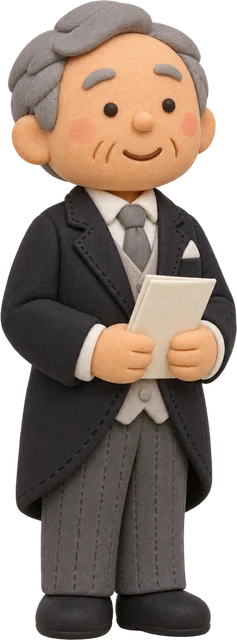
A senior naval statesman who survived being shot in the February 26 Incident, he became prime minister in April 1945 and led the decision to accept the Potsdam Declaration.
Who was the prime minister who ended the war? It was Suzuki Kantaro, who was shot in the February 26 Incident and still survived. He became prime minister at the age of 77. After the atomic bombs and the Soviet entry into the war, the meeting was split, and he asked for the Emperor's decision. Japan surrendered on August 15. He shows that ending something is harder than starting it.
More detail
Two sources checked
What method did a 77-year-old prime minister use when given the mission of ending the war? Suzuki Kantaro was a naval officer who fought in the Sino-Japanese and Russo-Japanese Wars, and later served as chief of the Navy General Staff and as grand chamberlain to the emperor. As grand chamberlain he won the trust of the Showa Emperor.
In the February 26 Incident of 1936, rebel troops entered his house and shot him several times, and he was badly wounded. A story about his wife, Taka, is handed down: when the officers said they would "fire the finishing shot," she stopped them, and the officers saluted and withdrew. This story is a testimony handed down by tradition.
In April 1945 he declined because of his age, but at the emperor's earnest request he became prime minister. Outwardly the cabinet said it would "fight to the end," but inwardly it was looking for a path to ending the war. When the Potsdam Declaration came out in July, a remark he made at a press conference, meaning "treat it with silence," is said to have been taken by the Allies as a rejection, and its interpretation is still divided today.
In August, after the atomic bombs and the Soviet entry into the war, an Imperial Conference was held, and with opinion split in two, he asked the emperor directly to decide. The emperor chose surrender, and the Suzuki cabinet resigned en masse on August 15.
It is said that until his death he lived with the feeling that "all I did was end the war." His story shows that while starting a war is easy, ending one is far harder.
Life timeline
- 1868Born near Osaka
- 1929Became grand chamberlain to the emperor
He won the trust of the Showa Emperor. - 1936Was shot in the February 26 Incident
- 1945Became prime minister
It was April 7. - 1945His remark on the Potsdam Declaration became controversial
It was the end of July. - 1945Asked the emperor to decide at the Imperial Conferences
It was August 10 and 14. - 1945Cabinet resigned en masse
It was August 15. - 1948Died
He died on April 17.