 BETA
Person
Takeda Shingen
1521–1573 · Sengoku daimyo (Kai) · Muromachi Shogunate
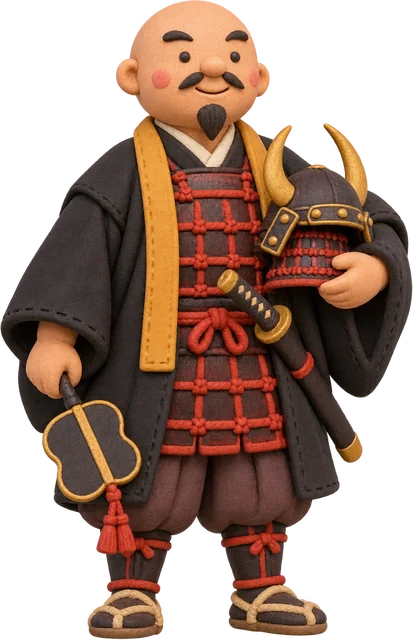
In 1541 he drove out his father and took over Kai, then conquered Shinano. He fought Uesugi Kenshin at Kawanakajima, defeated Tokugawa Ieyasu at Mikatagahara in 1572, and died in 1573 while marching west.
Who said, "People are the castle"? Shingen ruled Kai and fought Kenshin five times at Kawanakajima. He beat Ieyasu at Mikatagahara but died on the road in 1573. The Shingen embankment still stands today.
More detail
Two sources checked
Who said that people are the castle and people are the stone wall? These words are handed down as Takeda Shingen's. Shingen was a Sengoku daimyo who ruled Kai (Yamanashi); in 1541 he sent his father Nobutora to the Imagawa family and became head of the family.
Shingen soon set out to invade Shinano and overcame several lords such as the Suwa, Ogasawara and Murakami. When the expelled Murakami Yoshikiyo asked Uesugi Kenshin for help, the rivalry between the two heroes began. Starting in 1553 they fought five times at Kawanakajima, and the fourth battle, in 1561, was the fiercest.
Besides battles, Shingen is said to have built embankments to hold back river floods and protect farmers, and to have put in order a law code, the "Koshu Hatto," to steady his domain. He also raised money by developing gold mines. In 1572 he led a large army west and won a great victory over Ieyasu at Mikatagahara.
But in 1573, while heading toward Oda Nobunaga, his illness worsened, and he died on the way back. A story says he told his men to hide his death for three years. After that, the Takeda family fell in the time of his son Katsuyori.
Shingen's army is famous for the banner "Furinkazan." It is said to be taken from a passage in a military text and means to be swift as the wind, quiet as the forest, strike like fire and stand unmoving like a mountain.
Today in Yamanashi the Shingen Embankment and the Shingen Festival remain. He is still loved as a story of a leader who valued people.
Life timeline
- 1521Born in Kai
- 1541Drove out his father Nobutora and became head of the family
- 1553First clash with Kenshin at Kawanakajima
- 1561Fourth Battle of Kawanakajima
- 1572Defeated Ieyasu at Mikatagahara
- 1573Died while heading west
Related events
- 1467Sengoku (Warring States) Period
- 1553The Battles of Kawanakajima: Shingen vs. Kenshin
- 1560Battle of Okehazama: Oda Nobunaga's Surprise Attack