 BETA
Person
Tanaka Shozo
1841–1913 · Politician and activist in the Ashio copper mine pollution incident · Empire of Japan
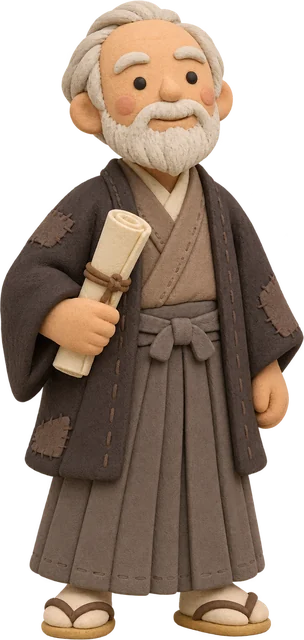
Tanaka Shozo, a village head from Tochigi, was elected to the first Diet in 1890. He raised in the Diet the problem of poison from the Ashio copper mine polluting the river, and in 1901 he handed a letter directly to the Emperor. He stayed with the suffering residents to the end.
How would a member of parliament feel running up to the Emperor's carriage? Tanaka Shozo spoke out in the Diet when poison from the Ashio copper mine polluted the river and farmers suffered, and in 1901 he tried to appeal directly to the Emperor. He stayed beside the harmed residents to the end. He shows how precious it is to protect the environment and people's lives.
More detail
Two sources checked
What must it have felt like for a member of parliament to give up his seat and run toward the emperor's carriage? Tanaka Shozo was born in 1841 in Shimotsuke (today's Tochigi Prefecture), the son of a village head. In his youth he stood up to a lord's abuses and was even jailed, and he spread ideas of liberty and people's rights by running a newspaper.
Elected to the House of Representatives in the first general election in 1890, he soon learned that poison (mine pollution) flowing from the Ashio copper mine was killing the fields and fish along the Watarase River. Tens of thousands of residents were harmed. Shozo gave a speech in the Diet demanding 'stop the mine,' but copper was an important Japanese export, so the government and the company dragged their feet.
Residents walked all the way to Tokyo to petition, clashed with police, and were arrested. Finally, in 1901, Shozo threw away his seat. That December he ran toward the emperor's carriage on a Tokyo street, trying to hand over a petition (a direct appeal). He was seized at once but released, and the incident was covered in big stories in every newspaper, making the mine pollution problem known to the world.
The government planned to flood Yanaka Village after 1904, saying it would build a reservoir to prevent floods. Shozo stayed in the village to the end and fought alongside the residents. It is said that when he died in 1913 at the age of seventy-two, his belongings were only a Bible and a few other things.
His life reminds us that protecting the environment and people's lives matters as much as the speed at which the economy grows.
Life timeline
- 1879Founds the Tochigi Shimbun
- 1880Becomes a member of the Tochigi prefectural assembly
- 1890Elected in the first House of Representatives election
- 1891First raises the Ashio mine pollution problem in the Diet
- 1901Resigns his seat and tries to petition the emperor directly
This was in December. - 1904Resistance at Yanaka Village begins
- 1913Dies