 BETA
Person
Togo Heihachiro
1847–1934 · Fleet admiral and commander of the Combined Fleet · Empire of Japan
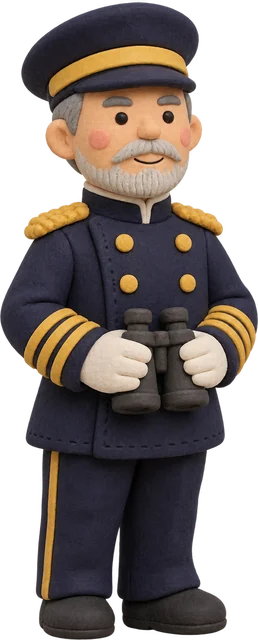
Born in Kagoshima, Togo Heihachiro studied naval affairs in Britain and fought in the First Sino-Japanese War. In 1905 he nearly wiped out Russia's Baltic Fleet at the Battle of Tsushima, deciding the course of the Russo-Japanese War.
What was the secret that let the navy of a small island country defeat one of the world's strongest fleets? Togo Heihachiro, trained in the navy he learned about in Britain, defeated the Russian fleet at the Battle of Tsushima in 1905. He is a hero in Japan, but in Korea the victory remains painful because it marked the start of Japan's sphere of influence.
More detail
Two sources checked
What was the secret that let the navy of a small island nation defeat a fleet among the strongest in the world? Togo Heihachiro was born in 1847 into a samurai family of the Satsuma domain. In 1863 he lived through the war with Britain (the Anglo-Satsuma War) himself and felt the power of Western navies, and he also took part in the Boshin War.
In 1871 he studied in Britain, and for about seven years learned naval affairs at a merchant marine school and on warships. After returning, during the Sino-Japanese War, as captain of the cruiser Naniwa, he sank the Kowshing, a British merchant ship carrying Chinese troops, off Pungdo in 1894, causing a dispute over international law, and he was judged to have acted lawfully. This incident was also the start of the war in the seas off the Korean Peninsula.
In 1903, just before the Russo-Japanese War, he became commander of the Combined Fleet. In May 1905, when Russia's Baltic Fleet came around the distant seas and entered the Korea Strait, he met it in the sea off Tsushima. In the two-day battle, most of the Russian fleet was sunk or surrendered, and Japanese losses were very small. It is said that the signal flags went up saying 'the rise or fall of the Empire depends on this one battle.'
He became a fleet admiral in 1913 and from 1914 took charge of the education of the crown prince (later the Showa Emperor). He died in 1934 at the age of eighty-eight. In Japan he was revered as a hero, compared to Britain's Nelson. But this victory opened the way for the Korean Peninsula to fall under Japan's sphere of influence, so in Korea it remains a painful memory.
We should remember that one victory is a hero's story for some people and the beginning of pain for others.
Life timeline
- 1863Takes part in the Anglo-Satsuma War
- 1871Studies naval affairs in Britain
He stayed until 1878. - 1894Takes part in the Sino-Japanese War as a ship captain
- 1903Commander of the Combined Fleet
- 1905Defeats the Baltic Fleet at the Battle of Tsushima
This was on May 27-28. - 1913Becomes a fleet admiral
- 1934Dies