 BETA
Person
Togo Shigenori
1882–1950 · Foreign Minister and Diplomat in Charge at the Start and End of the War · Empire of Japan
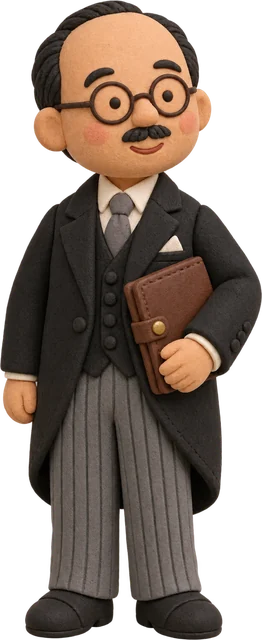
Born as a descendant of a Joseon potter, he was foreign minister both at the time of the attack on Pearl Harbor and at the time of the surrender. He insisted to the end on accepting the Potsdam Declaration and helped end the war.
Who was in charge of diplomacy both when the war began and when it ended? It was Togo Shigenori, a descendant of a Joseon potter. At first he could not stop the war, but in 1945 he insisted to the end on surrendering on the sole condition of keeping the imperial house, and he helped end the war. After the war he was sentenced to prison at a trial. His story shows how hard diplomacy for peace is.
More detail
Two sources checked
What was in the mind of a man who held the post of foreign minister both when the war began and when it ended? Togo Shigenori was born in a village in Kagoshima Prefecture where the descendants of Korean potters brought over during the Imjin War lived together. He grew up in a family whose surname was originally Park and had been changed to a Japanese name.
Becoming a diplomat, he served as ambassador to Germany and to the Soviet Union. In October 1941 he became foreign minister in the Tojo cabinet and handled the final negotiations with the United States. But in the face of the military's strong demands he could not prevent the war, and it began in December with the attack on Pearl Harbor. The following year he clashed with Tojo over the creation of the Greater East Asia Ministry and resigned.
In April 1945 he became foreign minister again in the Suzuki Kantaro cabinet. In August, as news of the atomic bombs and the Soviet entry into the war arrived one after another, the army wanted to surrender with conditions, but Togo insisted on "just one condition, the preservation of the imperial house." In the end, by the emperor's decision, the Potsdam Declaration was accepted.
After the war, at the Tokyo Trials he was sentenced to 20 years in prison for responsibility for starting the war, and he died in prison in 1950.
Togo's life shows how hard diplomacy for peace is, both in the post that tries to prevent a war and in the post that ends one. The tension felt by someone with roots in two countries also leaves us something to think about.
Life timeline
- 1882Born in Kagoshima
He came from a village where descendants of Korean potters lived. - 1912Became a diplomat
- 1937Became ambassador to the Soviet Union
- 1941Became foreign minister in the Tojo cabinet
He handled the final negotiations with the United States. - 1942Resigned in opposition to creating the Greater East Asia Ministry
- 1945Became foreign minister again and urged accepting the Potsdam Declaration
- 1948Sentenced to 20 years in prison at the Tokyo Trials
- 1950Died in prison
He died on July 23.
Related events
- 1941Attack on Pearl Harbor and the Start of the Pacific War
- 1944Peace Feelers (Attempts to End the War)
- 1945Atomic Bombings of Hiroshima and Nagasaki
- 1945Soviet Entry into the War against Japan and Invasion of Manchuria
- 1945Acceptance of the Potsdam Declaration and Surrender
- 1946The Tokyo Trials (International Military Tribunal for the Far East)