 BETA
Person
Uchimura Kanzo
1861–1930 · Christian Thinker and Founder of Non-Church Christianity · Empire of Japan
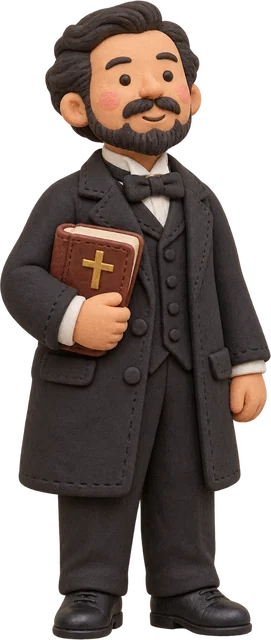
Uchimura Kanzo, son of a samurai of the Takasaki domain, was driven out of his teaching job in 1891 because he did not bow deeply before the Imperial Rescript on Education. Later he taught Non-Church Christianity (Mukyokai), which does not rely on church organizations, and spoke for non-war views during the Russo-Japanese War.
What if you lost your job because you bowed too little before the Emperor's writing? Uchimura Kanzo went through that, yet he still spoke about his faith in books and magazines, and he opposed the war during the Russo-Japanese War. The voice of a lonely conscience later became a seed of peace.
More detail
Two sources checked
What would it be like to lose your job because you did not bow low enough before the emperor's words? Uchimura Kanzo was born in 1861 into a samurai family of the Takasaki domain, received a Western-style education at the Sapporo Agricultural College, and became a Christian.
After finishing study in the United States, he became a temporary teacher at the First Higher Middle School in 1890, and the next year he caused a problem at the ceremony for reading aloud the Imperial Rescript on Education by not bowing deeply. There is an explanation that he did not have any disrespectful feeling toward the rescript, but the newspapers condemned it day after day as the "lese-majeste incident," and he was pushed out of the school. Soon after, his health also suffered, and he spent a hard time for a while.
After that he opened a path with his writing. He became known through books such as Consolations of a Christian, Representative Men of Japan and How I Became a Christian, and in 1900 he started the magazine Seisho no Kenkyu (Biblical Studies), speaking of "Mukyokai-shugi" (Non-church Christianity), which relies directly on the Bible rather than on a church organization.
When the Russo-Japanese War drew near in 1903 to 1904, he wrote against the war in the newspaper Yorozu Choho, and when the newspaper turned to support the war, he left it. Afterward too he cried out for peace and criticized militarism. He died in 1930.
His life shows how lonely one person's conscience can be when it collides with the mood of an age, but that such a voice later becomes a seed of peace.
Life timeline
- 1881Graduated from the Sapporo Agricultural College
- 1884Studied in the United States
- 1891Dismissed from teaching in the Imperial Rescript on Education incident
- 1894Published the writing that became the basis of Representative Men of Japan
- 1900Founded the magazine Seisho no Kenkyu
He preached Non-church Christianity. - 1903Published writings against the Russo-Japanese War
He left the Yorozu Choho. - 1930Died