 BETA
Person
Wake no Kiyomaro
733 CE–799 CE · Official who stopped the seizure of the throne and head of building Heian-kyo · Japan (Ritsuryō State)
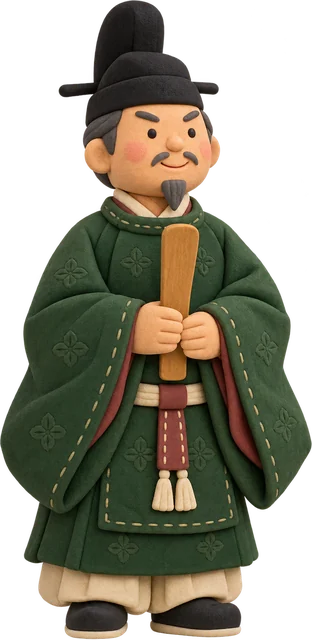
In 769 Wake no Kiyomaro went to confirm the oracle of Usa Hachiman and blocked Dokyo's ambition to take the throne. He was exiled, but under Emperor Kanmu he returned and led the move of the capital to Heian-kyo and its construction.
What happens if you say that a god's word is false? Wake no Kiyomaro went to confirm an oracle saying that Dokyo would take the throne, reported that it must not be, and was driven far away. But he soon came back and, helping Emperor Kanmu, took charge of building the new capital, Heian-kyo. One brave word protected the direction of the country.
More detail
Two sources checked
In an age when everyone had to believe whatever was called the word of a god, one man said that word was false. Wake no Kiyomaro, born in 733 as the son of a local chieftain of Bizen Province, won the trust of Empress Shotoku together with his older sister Hiromushi. Around 765 his name appears in the records as a junior officer of the Hyoefu (Guards).
In 769 a rumor spread that the will of the god had come from Usa Hachiman, saying that Dokyo should be placed on the throne. Kiyomaro was given the job of going to Usa in Kyushu in place of his sister and receiving the oracle himself. Two paths lay before him. If he followed Dokyo's wishes he would rise in the world, but if he went against them his life would be in danger.
When Kiyomaro returned, he reported that even the god was angered by Dokyo's wish for the throne. Furious, Dokyo changed his name and exiled him to Osumi. When Empress Shotoku died in 770 and Emperor Konin took the throne, Kiyomaro was called back to the capital and regained his former rank.
He became a close aide to Emperor Kammu and helped with the construction of Nagaoka-kyo, and when the work dragged on he is said to have proposed moving the capital to the Kadono region. He rose to a post in charge of building Heian-kyo and led the move of the capital in 794. He also cared not only for politics but for the lives of the people, carrying out waterway works, and at his death he left word that his land in his home region should be shared among poor farmers.
He died in 799. For one act of courage he was driven off to a remote place, but he carried out the work entrusted to him to the end. The Goo Shrine in Kyoto still honors him today.
Life timeline
- 765 CEFirst appears in the records as a junior officer of the Hyoefu
- 769 CEVerifies the Usa Hachiman oracle and blocks Dokyo's ambition for the throne
- 770 CEReturns from exile in Osumi and regains his rank
- 784 CEInvolved in building Nagaoka-kyo
- 794 CEContributes to the move of the capital as the person in charge of building Heian-kyo
- 799 CEDies