 BETA
PersonLegend
Wani
active 400–410 CE · Scholar said to have come from Baekje · Baekje
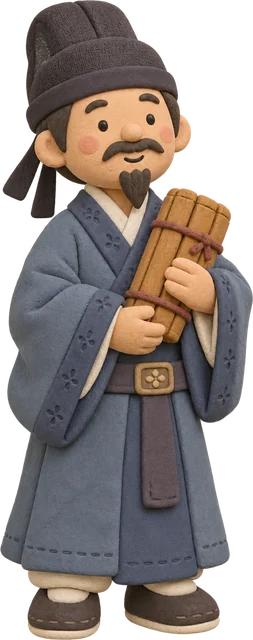
A Baekje scholar who appears in the Kojiki and the Nihon Shoki as the teacher of Uji no Wakiiratsuko and is said to have brought the Analects and the Thousand Character Classic to Japan. He is said to be the ancestor of the Kawachi no Fumi clan, but his dates and even whether he existed are debated.
Could a scholar have brought the Thousand Character Classic before it was even made? Old Japanese records say that the Baekje scholar Wani became the teacher of the crown prince and brought the Analects and the Thousand Character Classic. But the Thousand Character Classic was written much later, so the story may have been polished over time. Even so, it shows the great flow of writing and learning that crossed from the Korean Peninsula to Japan.
This comes from a legend. The story has been passed down from long ago, so we cannot know whether it really happened.
More detail
Two sources checked
Could there have been a scholar who brought the Thousand Character Classic before it was even written? Wang In is a Baekje scholar who appears in old Japanese records. The Kojiki calls him Wanikishi and the Nihon Shoki writes him as Wang In.
The story goes like this. The king of Baekje sent Ajiki to Japan, and he read the classics well. When Emperor Ojin asked, "Is there a scholar better than you?" Ajiki recommended Wang In, and Wang In crossed over and is said to have taught the crown prince Uji no Wakiiratsuko. From his point of view, the choice was probably one of two. It was an age when a person who knew writing was the power of the state.
The Kojiki says that Wang In brought ten volumes of the Analects and one volume of the Thousand Character Classic. But the Thousand Character Classic was made in the Liang dynasty in China in the 6th century, so the dates do not match. Some also think this part was polished in later times. The Kojiki is read as pointing to the time of King Geunchogo and the Nihon Shoki to the end of King Asin's reign, so the dates of the two records also differ by 30 to 40 years.
Wang In is regarded as the ancestor of the Fumi clan of Kawachi, a family in charge of writing and records. This family lived in the Furuichi area and did the court's document work. Because the name Wang In does not appear in old Korean records, there is also a claim that he was a figure made in Japan.
So it is hard to say for certain that Wang In was a real person, but his is a name that symbolizes the great current of learning and the use of writing from the Korean Peninsula nurturing ancient Japanese society. Since it is a name we often meet in stories of Korea-Japan exchange today, we need an eye that reads tradition and fact together.
Life timeline
- 400 CESaid to have crossed from Baekje and taught the crown prince
The dates differ between the Nihon Shoki and the Kojiki. - 405 CEStory of passing on the Analects and the Thousand Character Classic
It does not match the date of the Thousand Character Classic and may have been polished in later times. - 410 CERevered as ancestor of the Fumi clan of Kawachi
A family in charge of documents. - 420 CEHis descendants, the Fumi clan, handled records and documents
They are said to have continued as a family handling writing in the Furuichi area of Kawachi. - 530 CEThe Thousand Character Classic was made in Liang China
Pointed out as grounds for the dates of the Wang In tradition not matching. The year roughly marks the first half of the 6th century.