 BETA
Person
Watanabe Kazan
1793–1841 · Painter, Dutch Learning scholar, senior retainer of the Tahara domain · Edo Shogunate
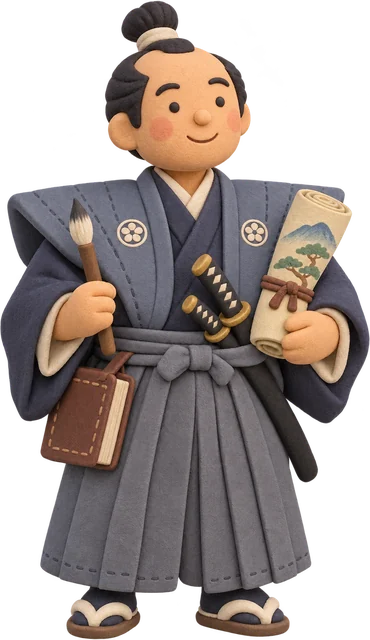
A retainer of the Tahara domain and a painter, he supported Dutch Learning. He was placed under house arrest in the 1839 Bansha no Goku incident, and in 1841 he took his own life so as not to bring trouble to his lord.
What happens to a person who tries to hold both the brush and politics? Kazan was a senior retainer of his domain and a painter who supported Dutch Learning, but he was put under house arrest in the 1839 Bansha no Goku incident and took his own life in 1841. He shows how precious the freedom to speak one's mind is.
More detail
Two sources checked
What became of a man who tried to hold both the brush and politics? Watanabe Kazan was born in Edo in 1793 into the family of a retainer of the Tahara domain in Mikawa. The family was poor, but he had great talent for painting.
In 1832 he became a senior councillor (karo) of the domain and took charge of coastal defense and reform. It is said that during the famine of 1836-1837 no one starved to death in his domain. He also mixed with scholars of Dutch learning and acted as a patron of Western studies.
In 1837, when the shogunate drove off a foreign ship in the Morrison incident, he thought the policy was dangerous. In 1839 he wrote the critical essay Shinkiron, which led to the Bansha no Goku (the Bansha Prison incident). He was sent to his home domain of Tahara and kept confined. It resembles a student being disciplined for writing an article in the class newspaper that criticized the school.
His pupils held an exhibition of his paintings to help support his life, but a rumor spread that he was selling paintings while under house arrest. Fearing it would bring trouble to the domain lord, Kazan took his own life in 1841 at the age of forty-nine. His best-known works are portraits drawn with striking realism.
It is also said that in 1835 he broke custom by drawing the dead face of Kinrei, son of the novelist Bakin, inside the coffin. In an age when speaking one's mind was dangerous, he tried to the end to think for himself, as a painter and a scholar.
Life timeline
- 1793Born in Edo
- 1832Became a senior councillor of the Tahara domain
- 1837Criticized the shogunate's response after the Morrison incident
- 1839Wrote Shinkiron and was confined in the Bansha Prison incident
- 1841Took his own life in Tahara